Can You See Whales From A Mooloolaba Canal Cruise?
No, a Mooloolaba canal cruise stays inside the river and canal system; whale boats leave the river for open ocean about 15 minutes from the dock, June to early November, from A$115 per person.
No, you will not see whales on a Mooloolaba canal cruise, because the canal boats never leave the Mooloolaba Harbour River and Canal System. To see humpbacks, you need a dedicated whale watching boat, which departs The Wharf and motors out to open ocean, about 15 minutes from the dock.
The confusion is understandable, and it trips up plenty of visitors in winter. Mooloolaba sits at the mouth of the Mooloolah River, and the same jetty complex, The Wharf Mooloolaba at 123 Parkyn Parade, is the departure point for both the quiet canal cruises that loop through the residential waterways and the larger boats that cross the river mouth and head for open water. Two very different products, one address. A reader scanning a departure board could easily assume they are variations of the same thing.
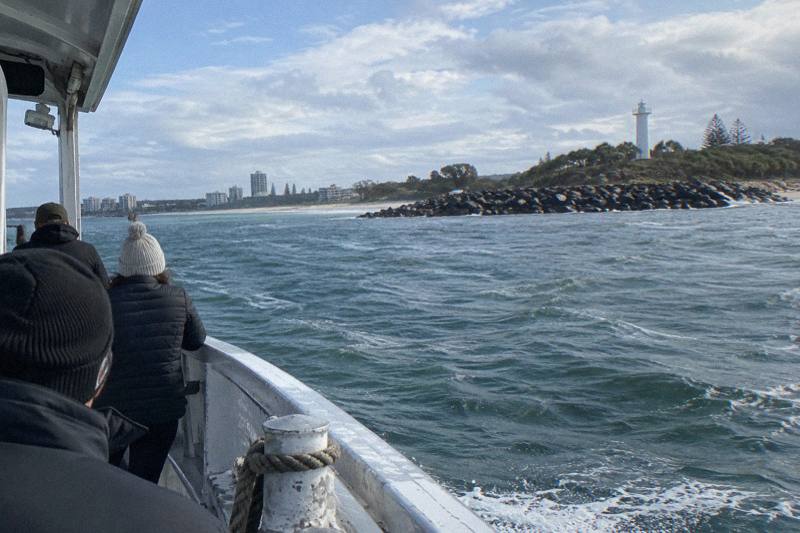
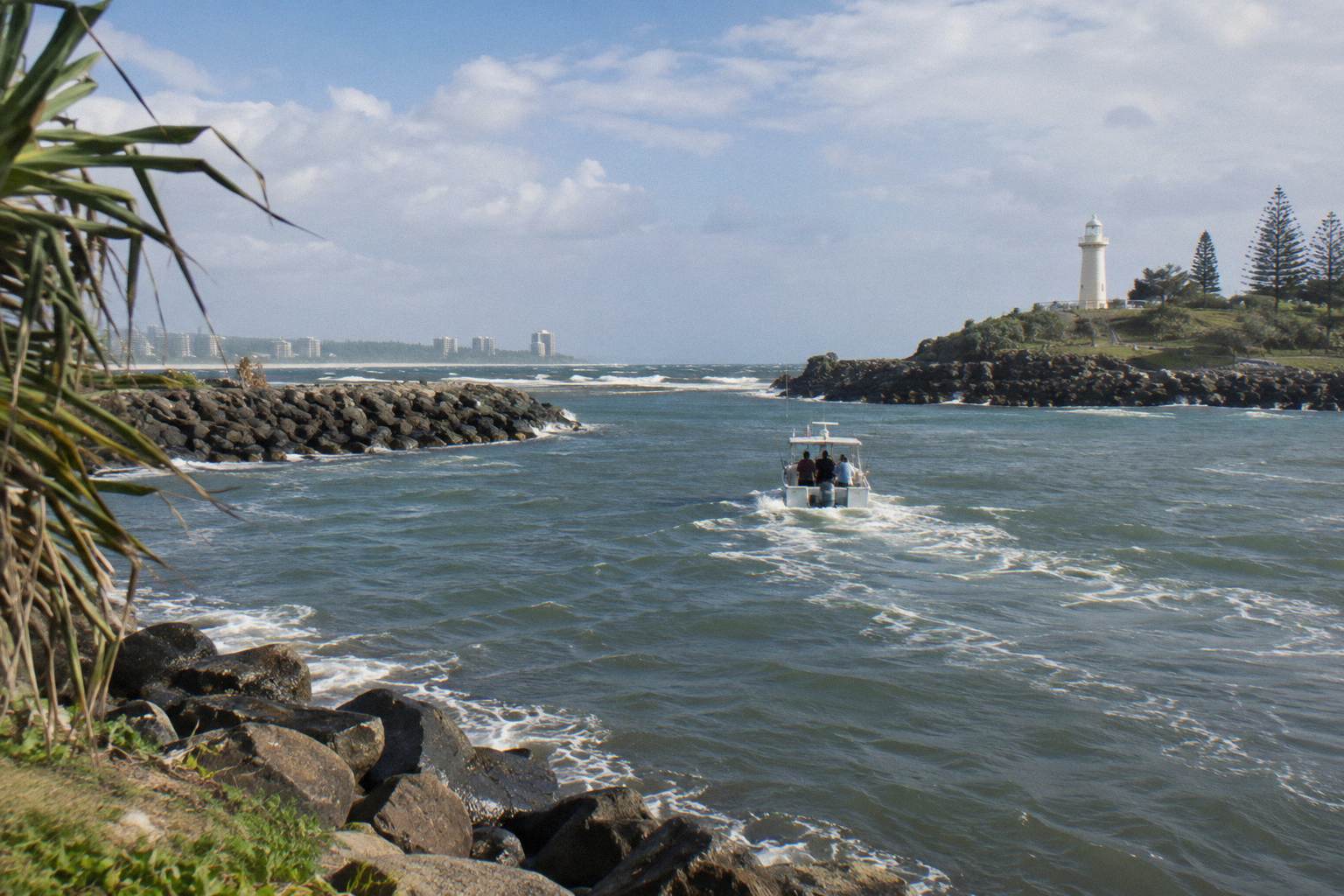
They are not. The canal cruises are flat-water sightseeing trips: the route runs through the Wharf and Marina, past Mooloolah Island and Minyama Island, into the Kawana canal system across the Mooloolaba, Minyama and Buddina canals, and out toward the river heads past La Balsa Park before turning back past the Mooloolaba Marina and Yacht Club. That entire loop sits inside the sheltered river and canal system. The whale boats do the opposite: they treat the river as a driveway, cross the Mooloolah Bar, and spend their time in the swell of the Coral Sea where the humpbacks actually migrate.
The distinction matters most between June and early November, which is the season the Wharf whale boat operators publish for their trips. That is when the question comes up, and that is when the wrong booking costs a family a morning. A canal cruise in July is a pleasant hour on still water, and a whale boat in July is a two-hour open-ocean expedition; neither one substitutes for the other. Picking the right one first beats upgrading later, because the two trips rarely share a departure time.
If humpbacks are the reason for the trip, the boat that leaves the river is the Whale Watching Cruise, and everything else on the water here plays a supporting role.
The price gap also tells the story before any timetable does. The Original 1-Hour Canal Cruise starts from A$38 per person for its hour on the water, while the Whale Watching Cruise starts from A$115 per person for two hours, and all amounts are in Australian dollars. Nobody prices a flat-water canal loop and an open-ocean whale expedition the same way, because the boats, the crewing and the distances involved are different beasts. The fare difference is the clearest signal that one of these trips crosses a bar and the other does not.
For a reader deciding right now, three options cover the realistic spread: the whale boat itself, the coastal turtle trip that also leaves the river, and the canal cruise for the flat-water day. Each suits a different kind of traveller.
Why The Canal Boats Stay Inside The River
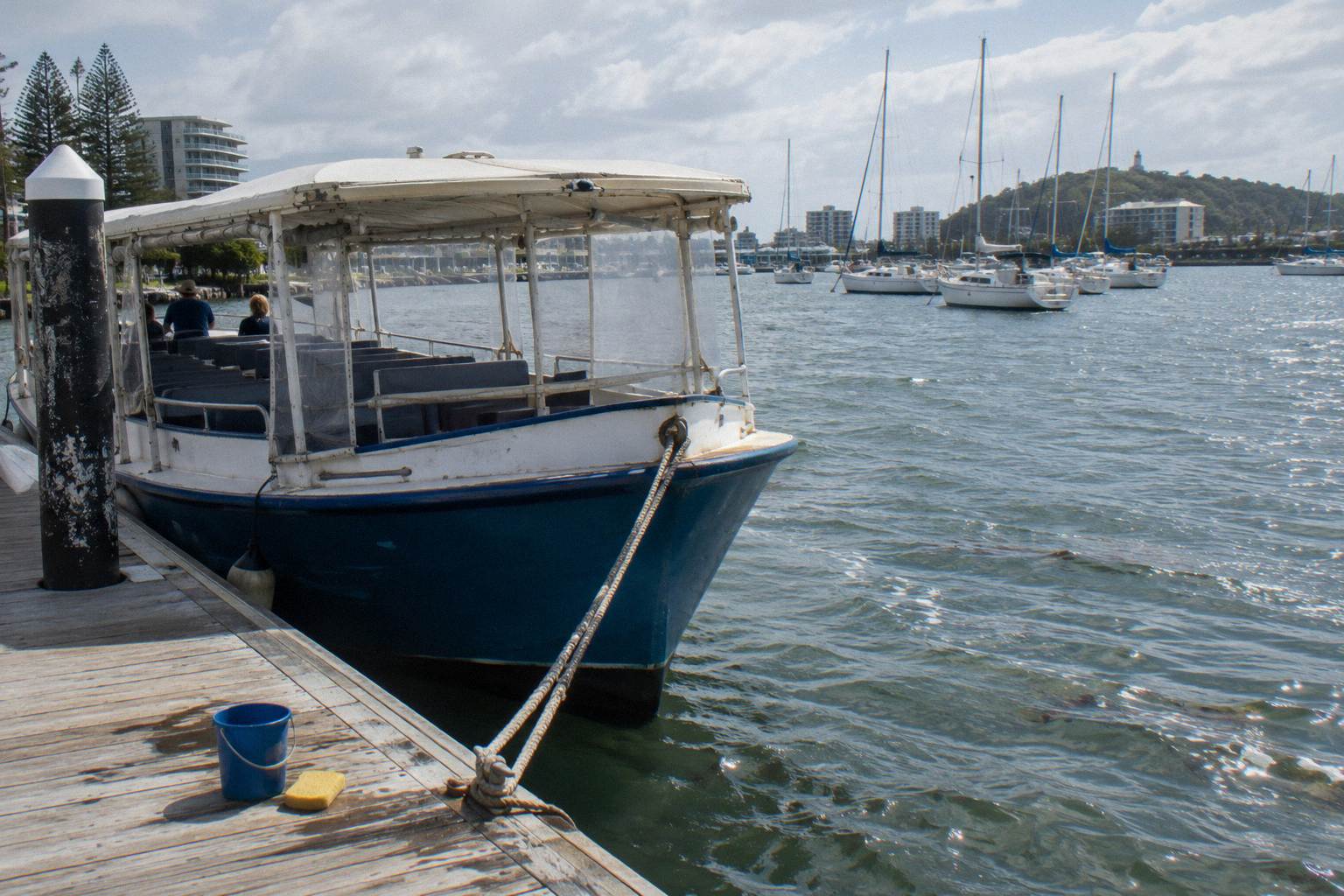
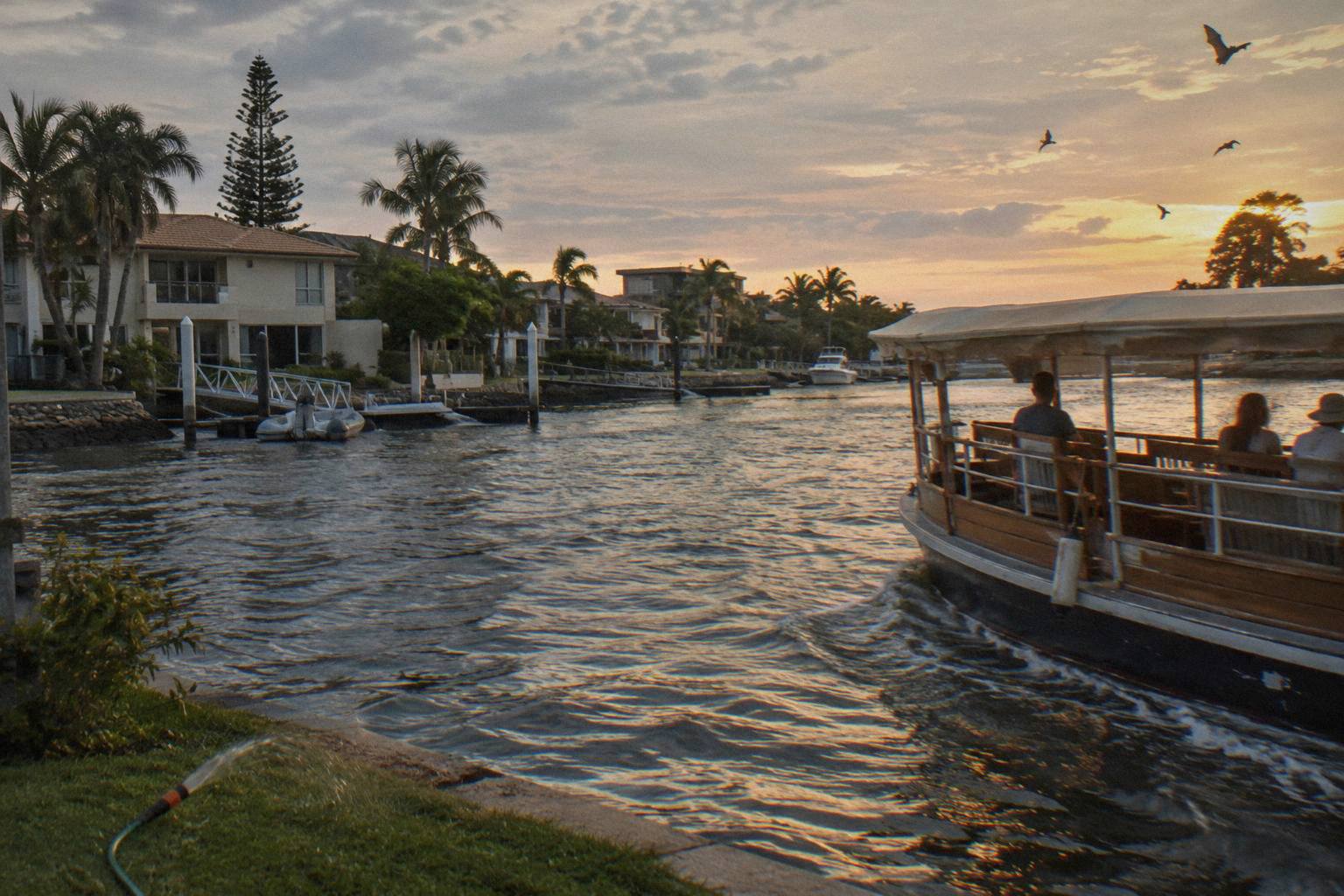
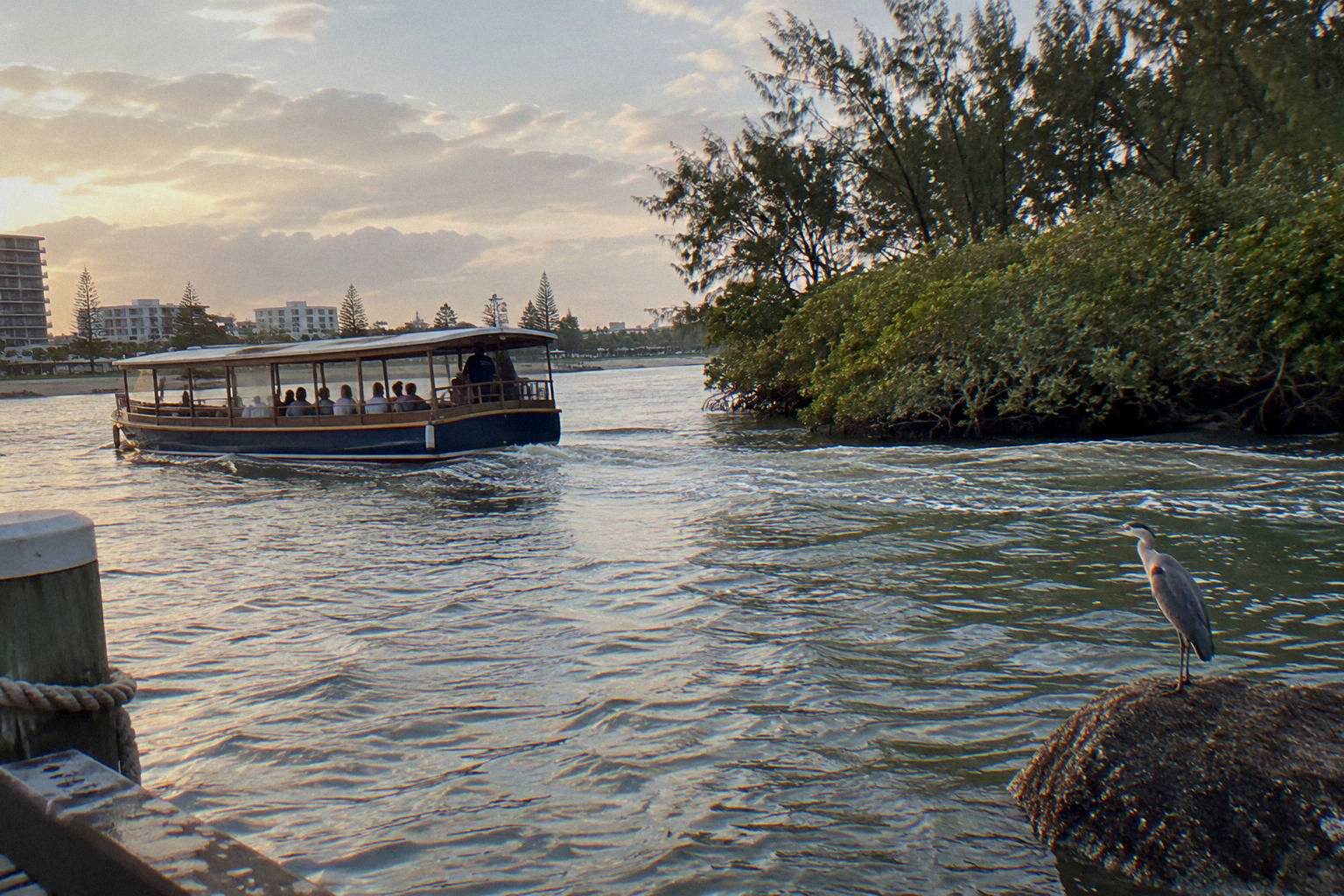
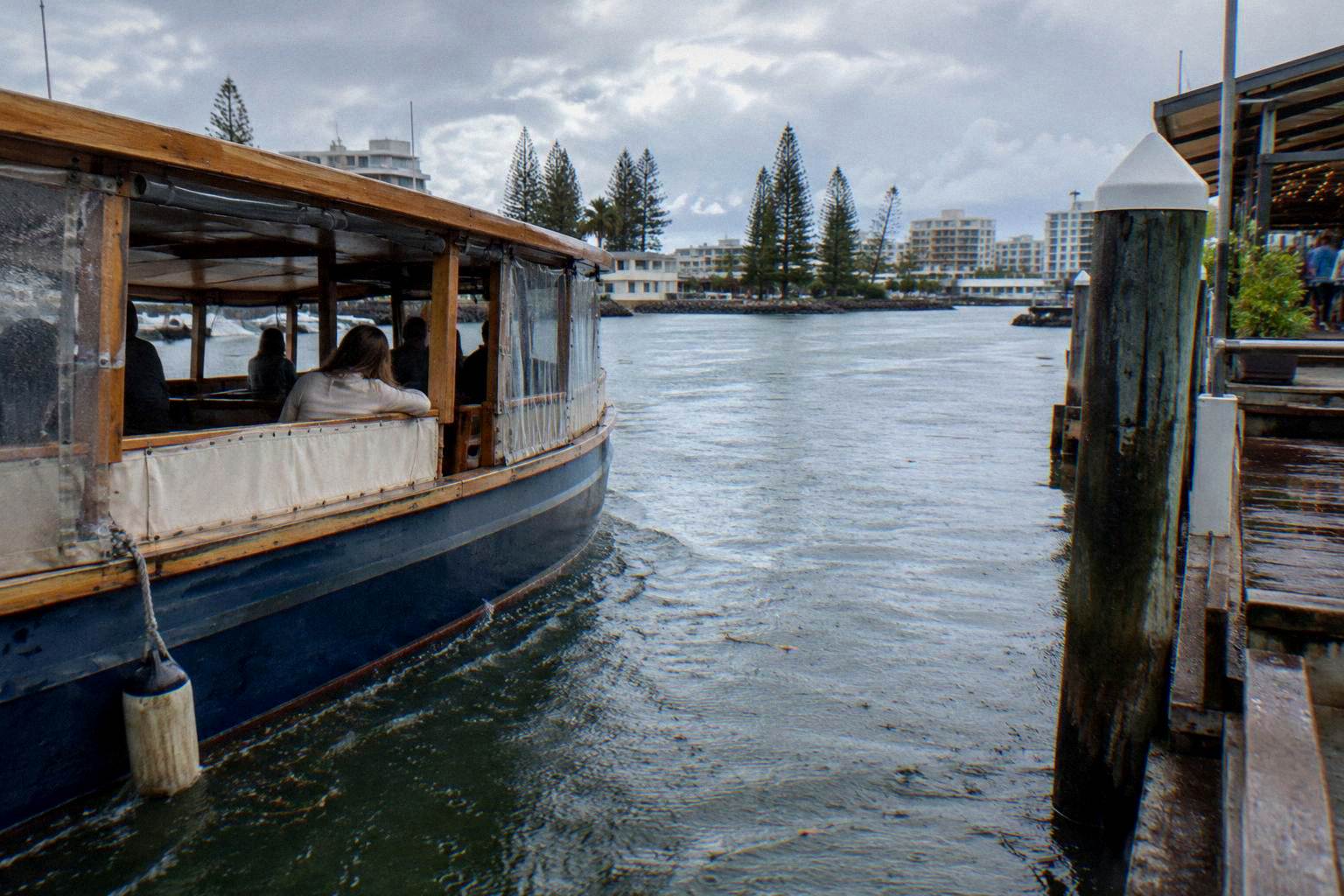
The canal cruise operators design their trips around still water, and the boats reflect that choice. The Original 1-Hour Canal Cruise runs on the MV Mudjimba, a timber vessel the operator says was built in 1963 as a Brisbane cross-river ferry and has run from The Wharf for over thirty years. Covered all-weather construction, a licensed bar and a small toilet point at sheltered water, not open ocean.
The operator's own FAQ frames the trip's limits exactly: the boat does not leave the Mooloolaba Harbour River and Canal System. That single sentence answers the whale question by itself. Humpbacks migrating along the coast pass Mooloolaba in open water beyond the river mouth, and a vessel that turns around at the river heads simply never reaches the water they swim in. It is not a matter of luck or timing on the day; the geography of the route makes a whale sighting from the canal boat the wrong thing to plan around.
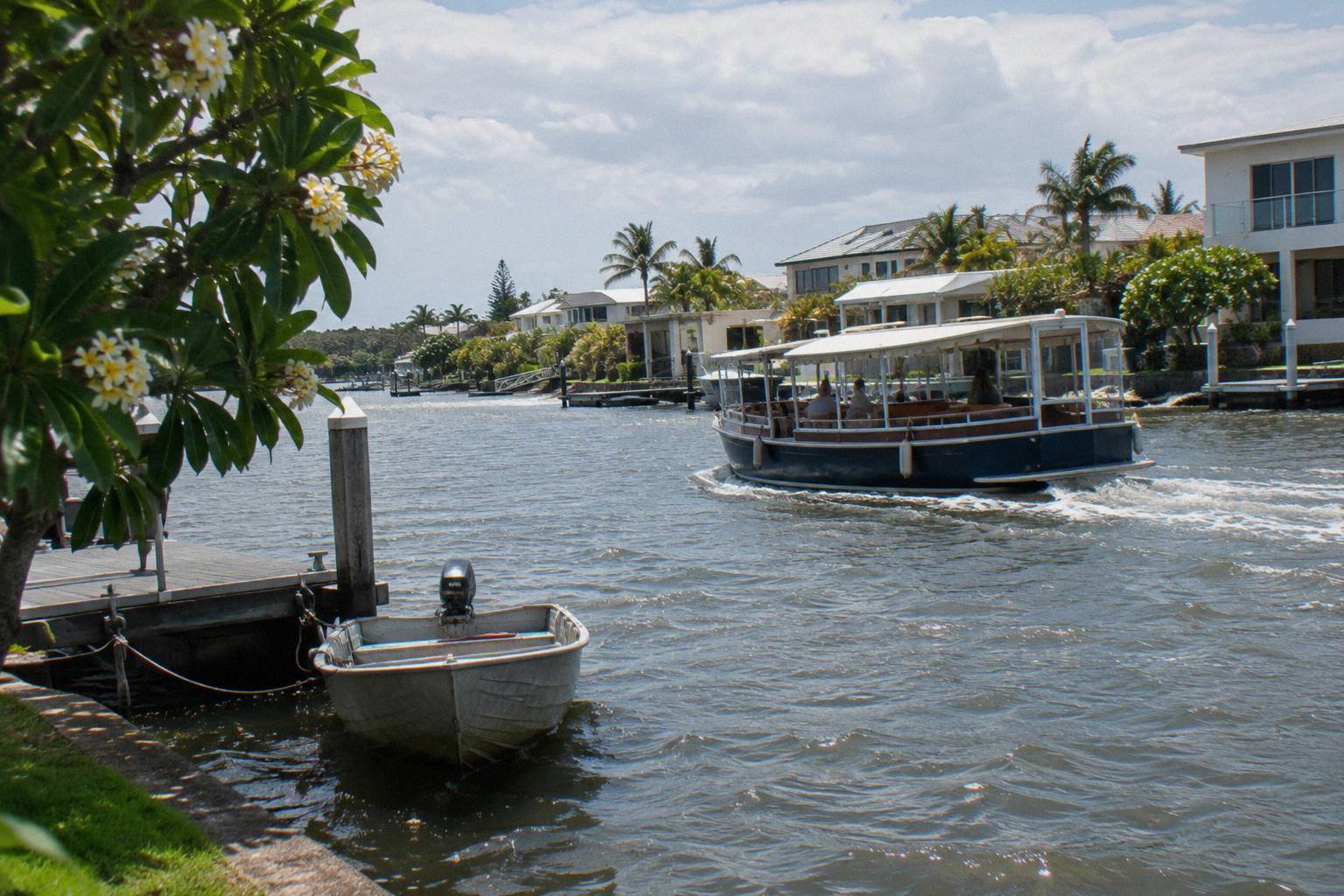
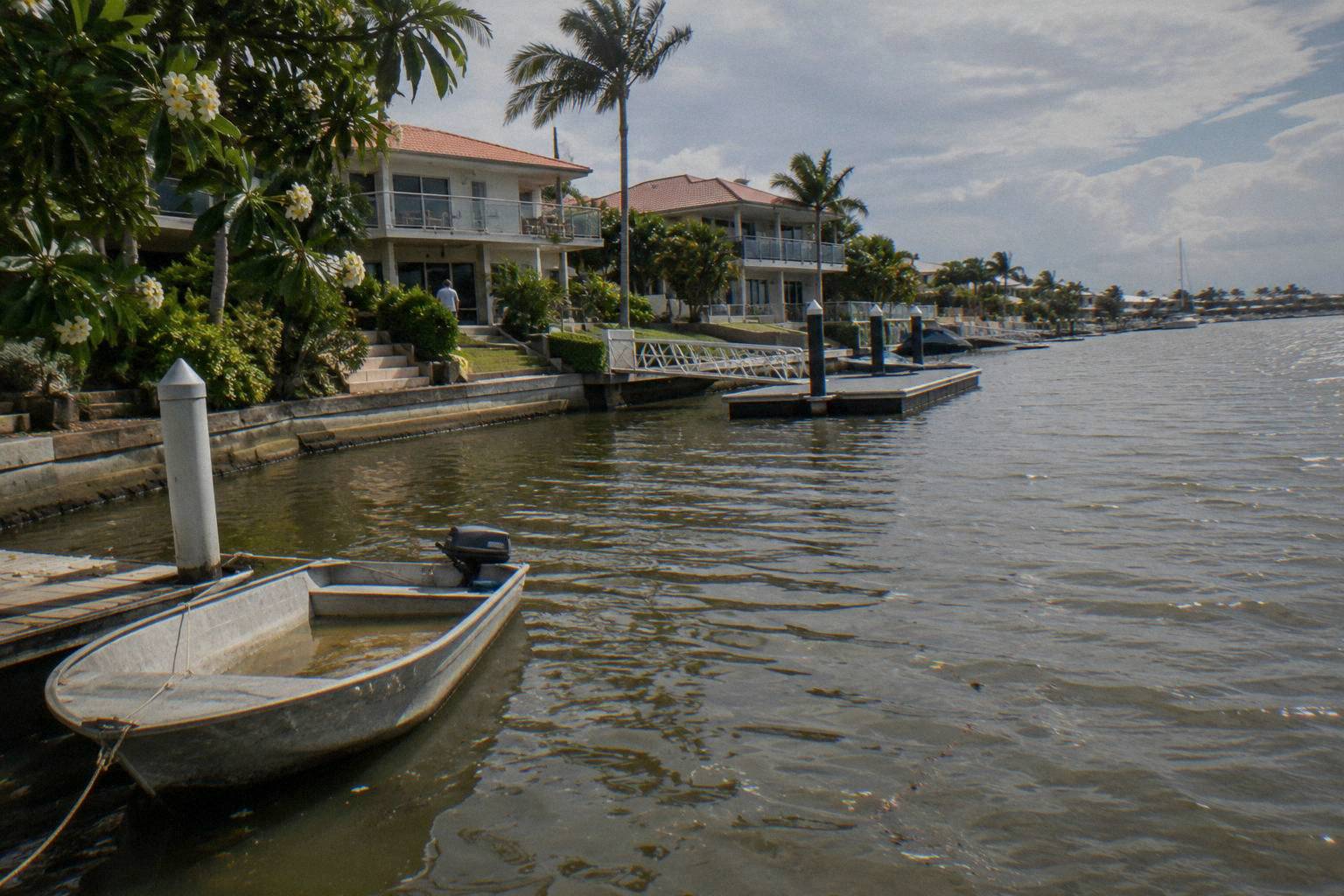
What the canal cruise offers instead is a look at the waterfront itself. The route, as the operator's one-hour page describes it, takes in the Wharf and Marina, Mooloolah Island, Minyama Island, the Kawana canal system, a turn out toward the river heads past La Balsa Park, a view the operator describes as stretching "from Mooloolaba Beach to Noosa Heads", and the fishing fleet, which the operator calls "Australia's largest long-line fishing fleet". Guests may take the helm beside the skipper, and the operator says passengers "may even catch a glimpse of" the pilot boats and the Osprey nest, with the emphasis on may. None of that is whale territory, but it is a full hour of waterborne sightseeing that stays dry, level and close to shore.
The vessel's character reinforces the point. An oak-planked, bunya-pine timber ferry built for Brisbane's Hamilton to Bulimba crossing, refitted and run by a family business since 2021 according to the operator's about page, is built for sheltered water and steady pace. The booking page caps the group at 30 guests, check-in is 15 minutes before departure, and the operator page pattern shows departures at 11am, 1pm and 2.30pm daily, though times may vary and a departure can be dropped for low numbers or weather. It is a well-oiled local ritual, not an expedition, and booking it expecting whales is booking the wrong ritual.
There is also a practical reason no canal operator improvises a detour to sea. Crossing the Mooloolah Bar, the shifting sandbar at the river mouth, is a different class of boating, and Maritime Safety Queensland lists it as a designated coastal bar where lifejackets are compulsory for everyone on an open boat or in the open area of any boat. A canal cruise with closed-in sides, a licensed bar and a 1963 ferry hull is not rigged for that, and its operators have never suggested it is. The two products are not in competition; they operate in different bodies of water.
If the question in your head is really whether the money and the morning go toward whales, the answer is that Mooloolaba River Cruises separates the two trips cleanly, and the whale question always points to the boat that leaves the river. Before committing, it helps to check the departure picture for your date.
What The Whale Watching Boat Actually Does
The whale boats from The Wharf leave the river for the open ocean, and the trip is built around that crossing. Wharf whale-boat operators describe about 15 minutes from the dock to open water, then 2 to 3.5 hours on the water looking for humpbacks, in a season the operator pages run from June to early November. The Whale Watching Cruise sold here is a 2-hour trip from A$115 per person.
The trip departs The Wharf Mooloolaba, with the operator, boat and pickup details not published on the booking page, so ask the operator for those specifics when booking. The 15-minute transit is the number that settles the geography question. A vessel that spends a quarter of an hour simply getting to where the whales might be is not a canal cruise with a detour; it is an ocean trip that happens to start in a river. Once across the bar, the boat works the open coastline, where the east Australian humpback migration passes in numbers the Queensland Government estimates at around 50,000 animals. No operator promises a sighting on any given day, and no page here will either; the season shape simply makes the odds reasonable between June and early November.
The season itself has a rhythm worth knowing when you book. Operator pages describe June and July as the northbound leg, August and September as a crossover period, and September and October as the southbound run with mothers and calves, before things wind down by early November. A trip in the middle of that window differs from one at either edge, and the crew's commentary will reflect which part of the migration is passing. The Queensland Government's whale page gives no Sunshine Coast season dates of its own, so the June to early November window stands on the operator pages, and the booking page for your date is the authority on whether departures are running.
What the whale boat is not, and should never be booked as, is a canal cruise. It crosses a designated coastal bar, so lifejackets are compulsory on open boats or in open areas under the Maritime Safety Queensland rule, and the motion of open water is a different experience from the flat river. Anyone prone to seasickness should ask the operator before booking rather than discovering the answer mid-crossing. The trade for all that is the only realistic chance of standing over a 16-metre animal, which no still-water trip can offer.
The Whale Watching Cruise sits alongside other open-water options from the same jetty complex, including the coastal turtle trip, but each is its own product with its own booking. Check availability on the booking page for the date, since whale departures follow the season rather than a year-round timetable.
Canal Cruise Or Whale Boat: The Comparison
The two trips differ on every axis that matters: where the boat goes, how long it runs, what it costs and what it can show. The canal cruise stays inside the river and canal system for an hour from A$38 per person; the whale boat crosses the bar into open ocean for two hours from A$115 per person. One is flat-water waterfront sightseeing, the other a seasonal ocean expedition.
The right choice depends entirely on whether whales are the point of the day, and the table below sets the printed facts side by side, using only the booking-page figures for each trip. Where a detail is not published, the cell says so rather than guessing.
| Original 1-Hour Canal Cruise | Whale Watching Cruise | |
|---|---|---|
| Where the boat goes | River and canal system only, per the operator | Leaves the river for open ocean |
| Water conditions | Still water inside the harbour system | Open ocean after crossing the bar |
| Duration | 1 hour | 2 hours |
| From price | from A$38 per person | from A$115 per person |
| Season | Runs year round on the operator page pattern | June to early November on operator pages |
| Rating | 4.8 from 175+ reviews | ask the operator |
| Operator | Mooloolaba Canal Cruise | not named on the booking page |
| Departure point | River-side jetty of The Wharf Mooloolaba | The Wharf Mooloolaba |
A few rows deserve a closer read. The price row is per person and both figures are booking-page from-prices in Australian dollars; the actual amount for a given date shows during booking. The rating row is candid about an information gap: the whale trip carries no published rating and review count to print here, so the 4.8 from 175+ reviews belongs to the canal cruise alone, and the two should never be compared as better or worse. The season row is the practical deal-breaker: a canal cruise can be booked in February, a whale boat cannot.
Framing it as a decision rather than a ranking helps. A family with small children, a visitor who wants photographs of waterfront houses, or anyone uneasy on open water lands on the canal cruise, and lands happily. A visitor in August whose whole reason for being on the coast is humpbacks lands on the whale boat, accepting the bar crossing and the swell as part of the deal. A traveller with two mornings can do both, and the itineraries barely overlap, but choosing one at random in whale season is the mistake.
Humpback Facts Worth Knowing Before You Book
The Queensland Government's whale page gives the numbers that put a Mooloolaba whale trip in perspective: east Australian humpbacks are estimated at around 50,000 animals, adults reach about 16 metres and 30 to 45 tonnes, and white whales such as the famous Migaloo type are rare and never promised. None of that guarantees anything on a given morning, but it explains why whale boats here run a season at all.
The migration is the engine of the whole product. Humpbacks travel north past the Sunshine Coast in winter and back south in spring, which is why the operator pages describe June and July as the northbound leg and September and October as the southbound one, with August and September as the crossover. The 50,000-animal estimate means the corridor off Mooloolaba is genuinely busy in season, and a two-hour ocean trip is a reasonable format for intercepting it. The same page's caution about white whales is worth absorbing: the pale animals that make headlines are rare, and no operator treats them as anything other than a fluke.
Size is the other number that changes how a trip feels. An animal of 16 metres and up to 45 tonnes is longer than the whale boat itself, and the Queensland Government whale page is the source for those figures. Nothing about a canal loop prepares a first-timer for that scale, which is partly why the open-water product exists and partly why people who booked the wrong trip feel the gap so sharply. Knowing the biology in advance makes the right booking decision almost automatic.
The season's internal shape, as the operator pages describe it, compresses into a simple planning picture:
| Period | Migration Leg | What Operator Pages Describe |
|---|---|---|
| June and July | Northbound | Whales heading north along the coast |
| August and September | Crossover | Both directions passing |
| September and October | Southbound | Southward run, mothers and calves |
| By early November | Season ends | Departures wind down |
What the government page does not do is name dates for the Sunshine Coast. The June to early November season stands on the operator pages, and those same pages note times and departures vary, so the booking page for a specific date remains the final word on whether a trip runs. Weather and sea conditions can also move or cancel an ocean departure, which is a different operating reality from the sheltered canal loop. Ask the operator about any condition that matters to your group when booking.
The Bar, Lifejackets And Why It Matters
Maritime Safety Queensland lists the Mooloolah Bar as a designated coastal bar, and on a designated bar lifejackets are compulsory for everyone on an open boat or in the open area of any boat. That rule applies to the whale boats and to private hire crossing the river mouth, and it does not apply to the canal cruises, which never leave the river and canal system.
The bar is the legal and physical line between the two products, and it is worth understanding before choosing. A coastal bar is the shallow, shifting stretch of water where a river meets the sea, and bar crossings are treated seriously enough that the state maritime authority maintains an official list of them and attaches a lifejacket rule to each. The Mooloolah Bar is on that list. For a passenger on a whale boat, the rule mostly shows up as crew instructions at the river mouth; for a canal cruiser, it never comes up at all, because the turnaround point sits inside the heads. The distinction is not marketing, it is maritime regulation, and the official bar crossing page states it in plain terms.
There is a second, quieter rule that shapes the canal experience. A general Queensland speed limit of 6 knots applies in boat harbours, marinas and canals, per the Maritime Safety Queensland speed-limits page, which is why the residential waterways the canal cruise explores are calm by design rather than by luck. That is the general state rule, not a Mooloolaba-specific limit. Between the canal speed rule and the bar lifejacket rule, the regulatory map already tells the story: sheltered water with housefronts on one side, regulated open water with whales on the other.
For a reader weighing comfort, the practical reading is straightforward. The canal cruise runs on water so sheltered the operator bills it as still water, with a covered boat, a licensed bar and blankets on board for the June to September wind. The whale boat trades all of that for the open sea, and anyone uncertain about their reaction to swell should ask the operator directly before booking rather than testing it at the bar. No statistic on motion or seasickness exists to print here, and none is needed; the question to the operator answers more than any average could.
What A Canal Cruise Actually Shows You
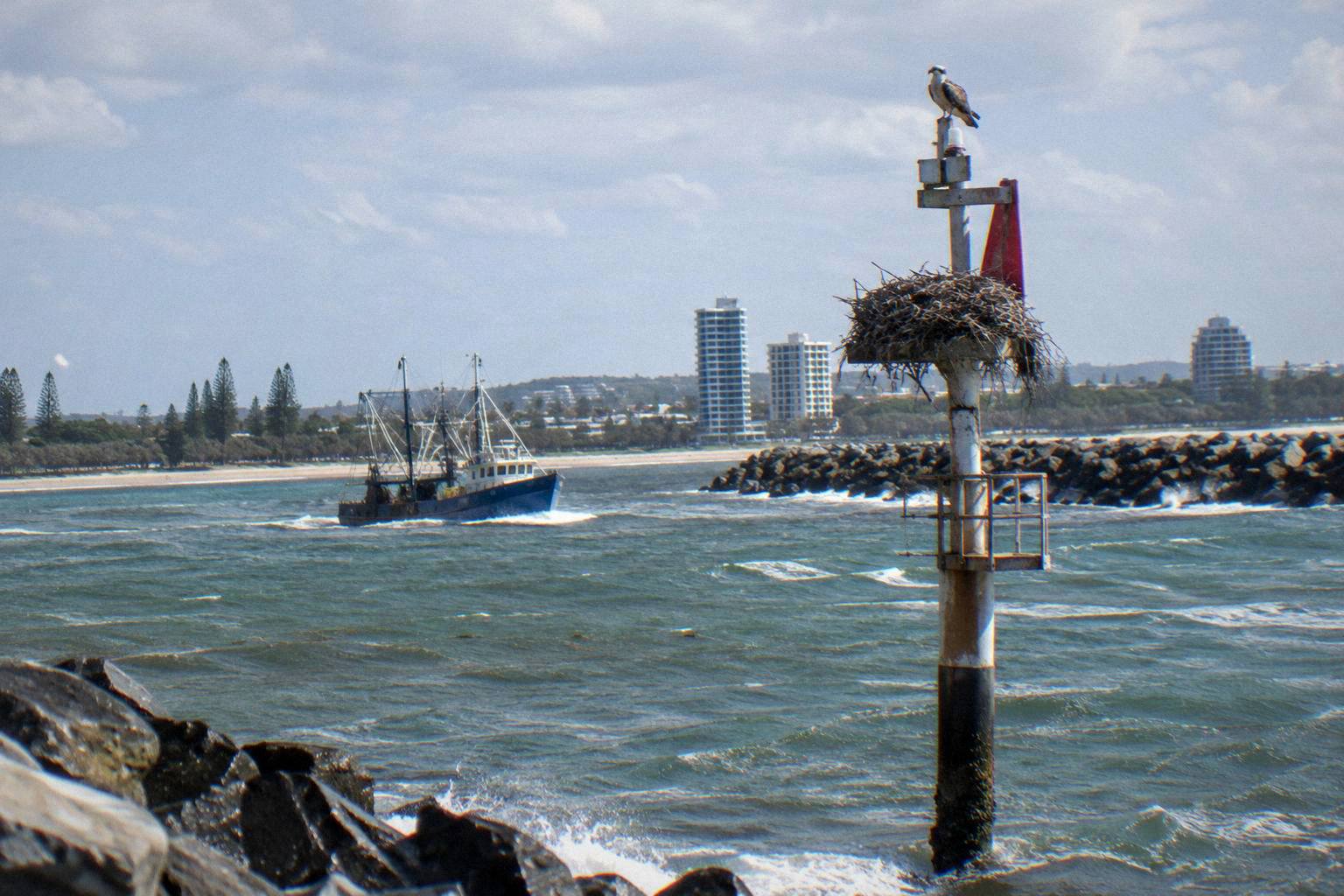
A canal cruise shows you the waterfront, not the ocean: the Wharf and Marina, Mooloolah Island, Minyama Island, the Kawana canal system, the turn toward the river heads past La Balsa Park, the fishing fleet the operator calls "Australia's largest long-line fishing fleet", and the Marina and Yacht Club on the way back. The operator says passengers "may even catch a glimpse of" pilot boats and the Osprey nest, and guests may take the helm beside the skipper.
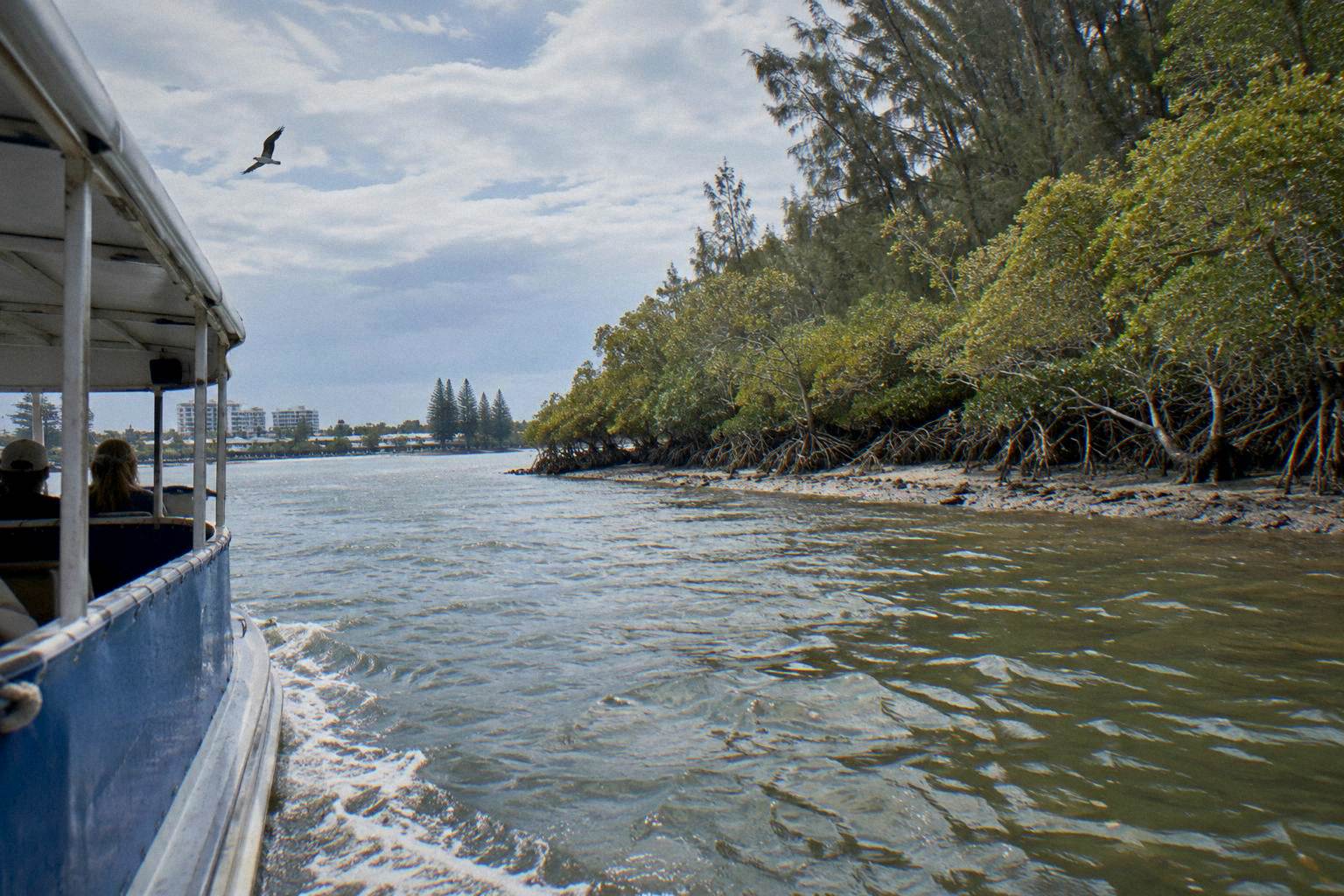
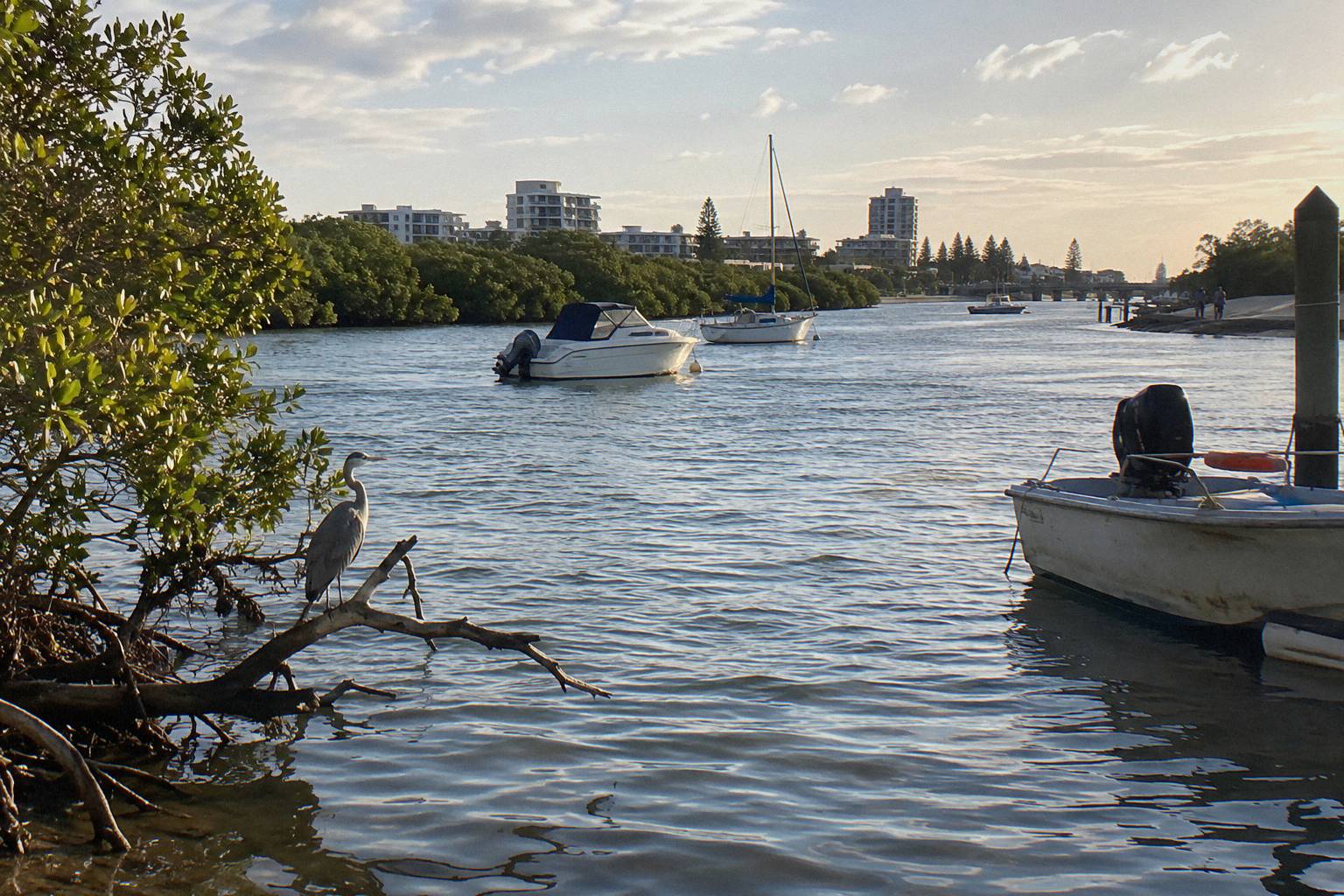
That inventory is what an hour from A$38 per person buys, and it is a fuller hour than the whale question gives it credit for. The waterfront housing of Minyama and Buddina, the working fishing fleet and the wide view the operator describes as running "from Mooloolaba Beach to Noosa Heads" give the trip its shape. Wildlife on a canal cruise means birds and the working harbour, not cetaceans; the Osprey nest mention is an operator's may, not a promise, and the trip never chases it. Booking the canal cruise for what it does, rather than against what it cannot do, is the difference between a good hour and a wasted one.
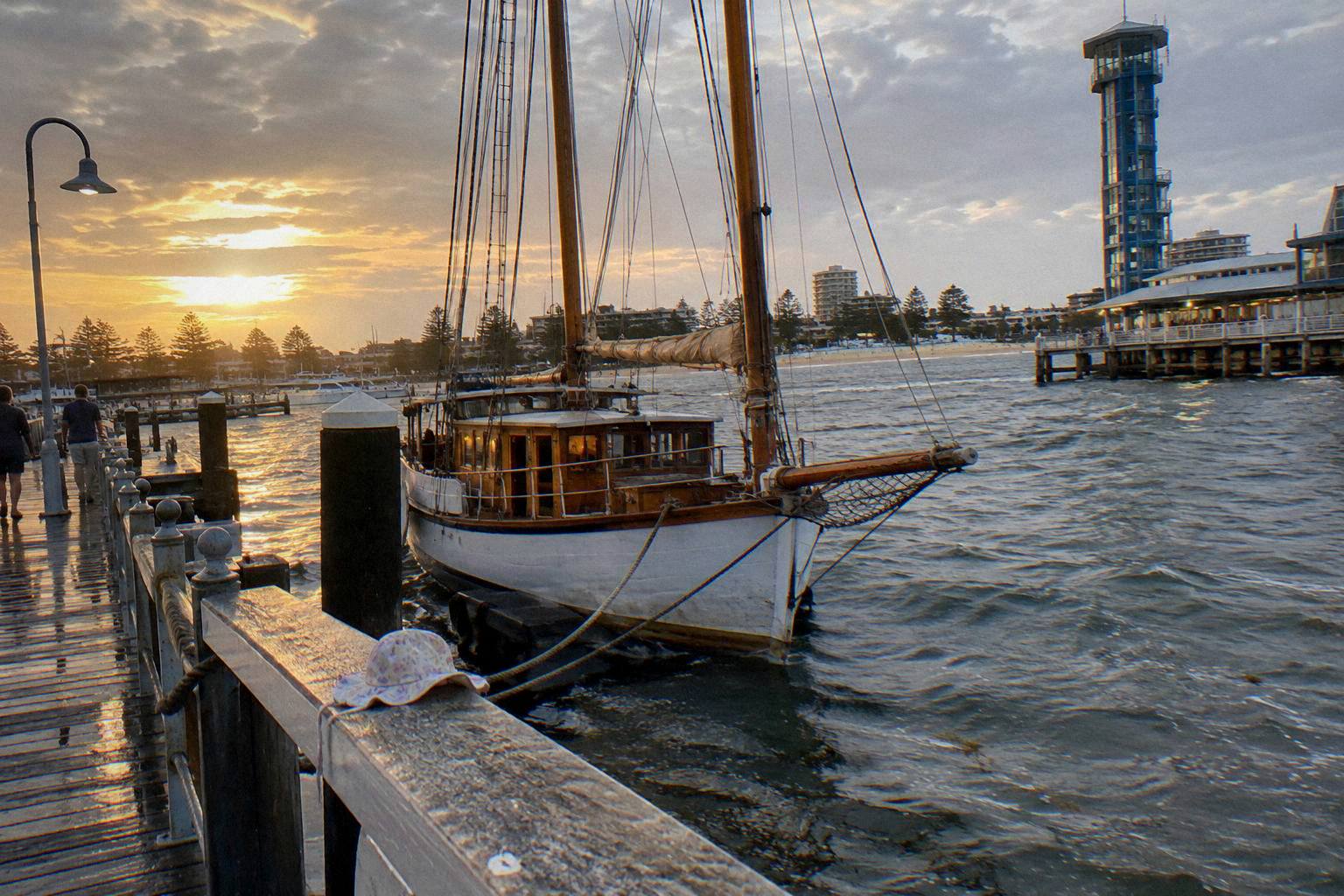
The boat itself is part of the show. The MV Mudjimba's history, a 1963 Brisbane cross-river ferry in oak and bunya pine brought to Mooloolaba in 1990, gives the trip a texture no new vessel copies, and the family that bought the business in 2021 has kept it running from The Wharf, which the operator says it has done for over thirty years. Check-in is 15 minutes before departure at the river-side jetty of The Wharf, the skipper collecting guests from that window. The booking page caps the group at 30, and a restroom is on board with drinks and snacks as extras from the bar.
For whale-season visitors who still want a flat-water day alongside their ocean morning, the canal cruise pairs well rather than competing. The how long the canal cruise runs question matters for stacking the two in one day, and the wider Mooloolaba canal cruise guide covers the route stop by stop.
Common Mistakes When Choosing A Boat In Whale Season
The recurring mistakes are booking a canal cruise and expecting whales, assuming every departure from The Wharf crosses the bar, leaving the decision to the last week of the season, and ignoring the different water conditions the two trips involve. Each one is avoidable with one piece of knowledge: canal boats stay inside the river and canal system, and whale boats leave it.
None of these errors is about a bad operator; every one is about a mismatched expectation. The first mistake is the most common. A visitor hears "cruise from The Wharf" in July, pictures humpbacks, books the A$38 hour and spends it looking at canal walls while the migration passes unseen beyond the heads. The operator's own FAQ sentence, that the boat does not leave the Mooloolaba Harbour River and Canal System, is the fix; read it once and the product is clear. The second mistake is the mirror image: expecting the whale boat to duck into the canals for variety, when its whole format is about 15 minutes of transit to open water and hours of ocean searching.
The third mistake is timing. The whale season runs June to early November on the operator pages, and a traveller who decides in October that this is the year for humpbacks is working the tail of the window, with the southbound leg thinning out toward early November. Checking availability early in the season, and being flexible on dates within it, beats a rushed final booking. The fourth is comfort: assuming the flat-water canal experience transfers to the open ocean, or vice versa. Anyone prone to seasickness should ask the whale operator directly; the canal cruise's still water is its own product and no predictor of the sea.
A final small one: arriving at the wrong jetty. The canal cruise meets at the river-side jetty of The Wharf behind Rice Boi, while the whale trip departs The Wharf Mooloolaba, and other trips leave from the marina side or Parkyn Parade. The booking page for each trip names its meeting point and the arrival window; reading it the night before prevents the classic missed-departure start. A departure can also be dropped for low numbers or weather on any trip, so a quick availability check the day before is cheap insurance.
For the open-water alternative that still keeps a foot in Mooloolaba, the coastal turtle trip by raft covers open water in a smaller format, and it pairs with the whale question the same way the canal cruise does, as a different product rather than a substitute.
Common Questions About Whales And Mooloolaba Cruises
Can You See Whales From A Mooloolaba Canal Cruise?
No. The canal cruise operator states that the boat does not leave the Mooloolaba Harbour River and Canal System, and whales migrate in the open ocean beyond the river mouth. Whale watching is a separate product on boats that cross the bar, from A$115 per person for 2 hours.
When Is Whale Season At Mooloolaba?
The Wharf whale-boat operators publish a season from June to early November. June and July are the northbound leg, September and October the southbound run, and August and September a crossover. The booking page for your date confirms whether departures are running.
How Far Does The Whale Boat Travel To See Whales?
Wharf whale-boat operators describe about 15 minutes from the dock to open water, then 2 to 3.5 hours on the water. The Whale Watching Cruise sold here is a 2-hour trip. No sighting is promised on any departure.
Can You See Whales From The Shore At Mooloolaba?
Whales pass in open water beyond the river mouth, and Point Cartwright at the river entrance is the headland overlooking that water. No page here promises a shore sighting; the whale boats exist because the animals are offshore.
Is The Canal Cruise A Good Backup If Whale Trips Are Full?
Only if you want what the canal cruise offers: an hour of still-water sightseeing through the canals and past the fishing fleet from A$38 per person, rated 4.8 from 175+ reviews. It is not a whale trip in any configuration, so treat it as a different experience rather than a substitute.
Do You Need Lifejackets On These Trips?
On the canal cruise, no bar is crossed and the lifejacket rule does not arise. On the open water, the Mooloolah Bar is a designated coastal bar where Maritime Safety Queensland makes lifejackets compulsory for everyone on an open boat or in an open area of any boat. Follow the crew's instructions.