Mooloolaba Weather And Cruise Days: Month By Month, Wind, Rain And Water
February brings the heaviest rain to Mooloolaba, September the least, and winter wind can feel chilly on the water from June to September. Month by month climate averages, operator weather rules and what to wear, so a forecast becomes a cruise decision.
Short answer
The nearby airport station records a mean maximum of 29.1 °C in January against 21.2 °C in July, with February the wettest month at 214.8 mm and September the driest at 50.7 mm. Canal cruises stay inside the river and canal system in still water, and operators may stand down a departure for bad weather or low numbers.
What Is Mooloolaba Weather Really Like Month By Month?
The numbers come from the nearby airport station, recorded at Marcoola since 1994, about 9 km north-west of The Wharf. Mean maximums run from 29.1 °C in January down to 21.2 °C in July, and the year averages 25.5 °C maximum. Rain falls somewhere in the pattern every month: 1,499.0 mm across 107.8 rain days annually, spread across all twelve.
Those figures matter for a cruise day more than a beach day, because the boats here run all year. The canal cruises operate on a daily pattern, the operator page for the Original 1-Hour Canal Cruise shows 11am, 1pm and 2.30pm departures seven days a week, though the operator adds that times may vary and a departure may not run for low numbers or bad weather. So the question a reader checking a forecast is really asking splits in two: will the cruise run, and will it be pleasant. The climate averages answer the pleasant half in broad strokes, and the operator rules answer the running half.
The table below is the full monthly picture from the Bureau of Meteorology's climate averages table for the airport station. Read the columns together rather than separately: March, for example, pairs a still-warm 28.0 °C mean maximum with 192.1 mm of rain over 12.7 rain days, which is almost the wettest profile of the year. July and August look dry on paper, 69.4 mm and 73.2 mm, but they also carry the coldest mornings, 9.7 °C and 10.1 °C mean minimums, and that combination shapes what a sunset boat feels like more than any single number.
| Month | Mean max C | Mean min C | Mean rain mm | Rain days 1 mm or more |
|---|---|---|---|---|
| January | 29.1 | 21.3 | 153.0 | 10.3 |
| February | 28.9 | 21.3 | 214.8 | 11.6 |
| March | 28.0 | 20.3 | 192.1 | 12.7 |
| April | 26.1 | 17.1 | 146.0 | 11.2 |
| May | 23.6 | 13.8 | 165.3 | 10.3 |
| June | 21.5 | 11.3 | 104.6 | 8.9 |
| July | 21.2 | 9.7 | 69.4 | 6.9 |
| August | 22.3 | 10.1 | 73.2 | 5.6 |
| September | 24.3 | 13.0 | 50.7 | 5.4 |
| October | 25.7 | 15.8 | 99.6 | 7.5 |
| November | 27.3 | 18.0 | 84.8 | 7.4 |
| December | 28.4 | 19.9 | 151.8 | 10.0 |
| Year | 25.5 | 16.0 | 1,499.0 | 107.8 |
One caution on reading averages for a single date. A mean of 214.8 mm for February describes the long run of every February on record, not the week you book. Rain in the warmer half of the year at the coast often arrives in short heavy falls rather than all-day drizzle, and a morning of rain does not decide an afternoon cruise. Treat the table as a planner for packing and expectations, and treat the two-day forecast as the thing that decides the day.
Which Months Are Wettest And Driest For A Cruise Day?
February is the wettest month on record at 214.8 mm across 11.6 rain days, with March close behind at 192.1 mm across 12.7 rain days, the highest rain-day count of the year. September is the driest at 50.7 mm over 5.4 rain days. Every other month sits between 69.4 mm and 165.3 mm, so the spread is real but not dramatic.
The practical reading is that no month is a write-off. Even in March, the month with the most rain days, the average works out to roughly one day in three recording at least 1 mm, and a rain day is not necessarily a washed-out day. September offers the leanest rain numbers alongside a warming trend, 24.3 °C mean maximum against August's 22.3 °C, which is why the shoulder months appeal for planning: fewer rain days, mild afternoons, and the same daily cruise pattern the operators run year-round.
Summer planning has a different shape. December through March carries the four highest rainfall totals and the four highest rain-day counts, so a summer cruise booking is best treated as flexible rather than fixed. That points toward trips with free cancellation up to 24 hours on the booking page, which covers the 1-Hour Canal Sunset Cruise, the Coastal Sunset Cruise, the Seafood Lunch Cruise, the Original 1-Hour Canal Cruise, the Whale Watching Cruise and every other cruise listed here, so all nine trips carry the same full-refund window if plans change before your date.
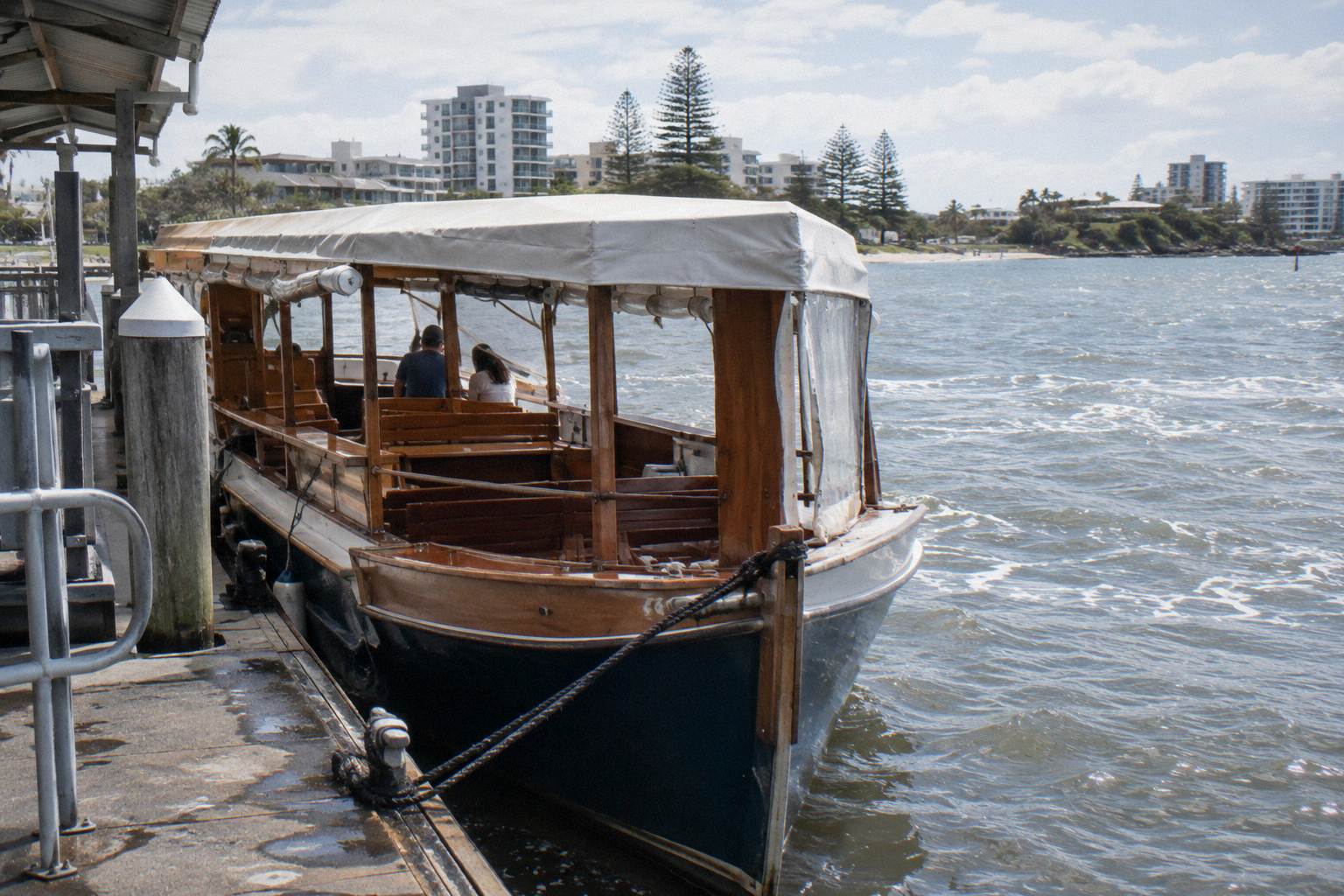
The choice of boat also softens a grey sky. The MV Mudjimba is covered with open sides that can be closed, the Coastal Cruises vessels are fully enclosed, and the Saltwater Eco Tours timber vessel is built for the climate. A shower that would end a beach plan often just means closing a side panel and continuing down the canal. For a fuller walk through the rain question, whether a Mooloolaba cruise runs in the rain covers the operator rules in detail.
Three trips between them cover most weather-aware plans: the covered Original 1-Hour Canal Cruise at its year-round pattern, the 1-Hour Canal Sunset Cruise, and the enclosed Seafood Lunch Cruise, which is the cruise with the most reviews at 4.8 from 900+ reviews.
How Does Weather Affect Whether A Cruise Runs?
Every operator here reserves the right to stand down or reschedule a departure for weather or low numbers, and no cruise is promised to sail. Mooloolaba Canal Cruise says its departures may not run for low numbers or bad weather, and Saltwater Eco Tours states it contacts guests to reschedule or resolve the booking if weather makes a departure unsafe or unpleasant. For the Coastal trips, the Aquaduck and the raft trips, ask the operator.
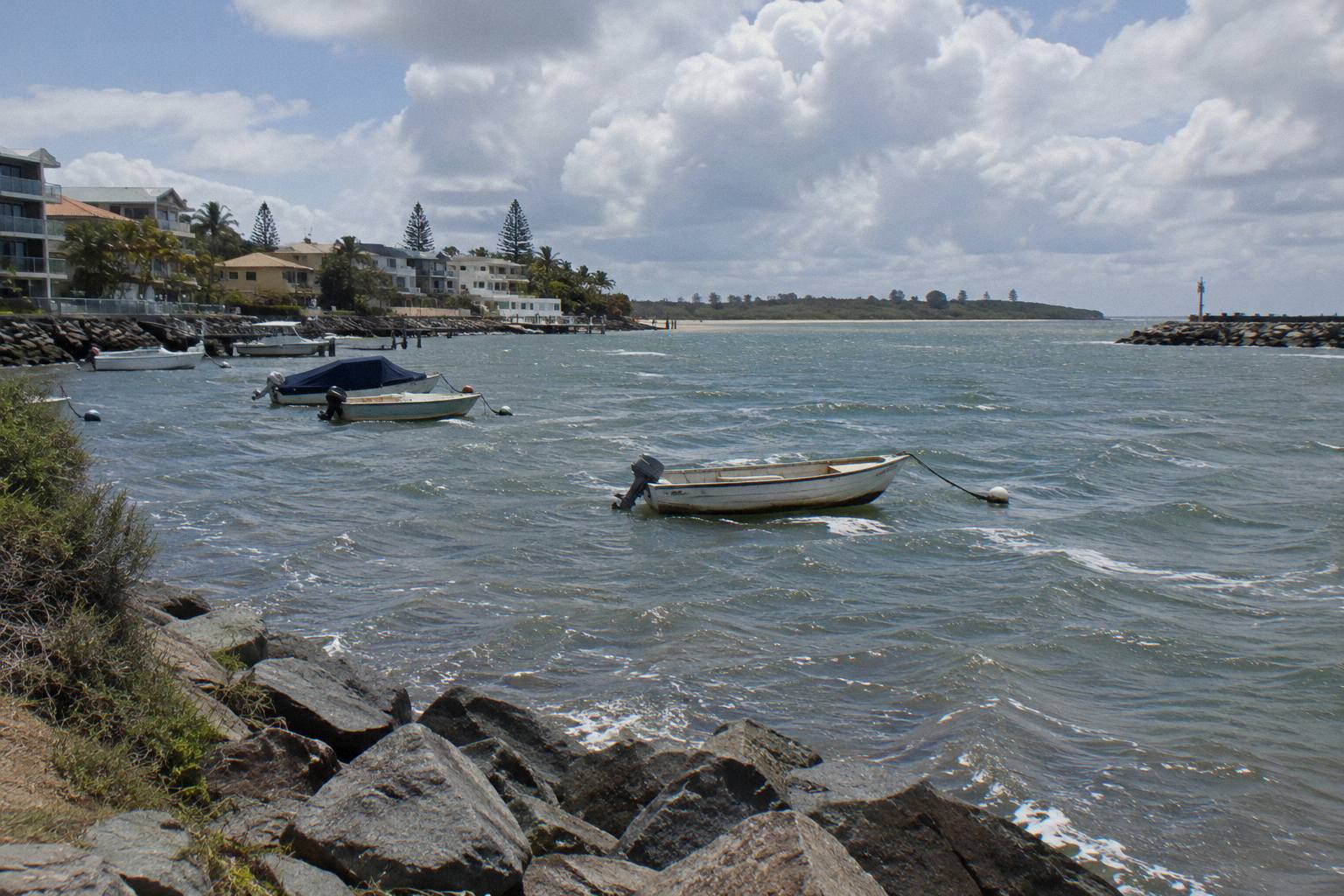
The still-water point matters most for nervous sailors. The Mooloolaba Canal Cruise FAQ states plainly, "The boat does not leave the Mooloolaba Harbour River and Canal System", so the canal trips never cross the river mouth into open ocean. The whale trips are different animals: whale boats from The Wharf leave the river for open water, and that distinction, sheltered canals versus open sea, is the single biggest weather factor in choosing between them.
Maritime rules draw the same line. Maritime Safety Queensland lists the Mooloolah Bar as a designated coastal bar, where lifejackets are compulsory for everyone on an open boat or in an open area of any boat. That rule bites on boats heading to sea, not on canal cruises, which stay inside the harbour and canals under the general 6-knot speed limit that applies in boat harbours, marinas and canals under the Maritime Safety Queensland speed-limit rules.
| Trip | What the operator publishes on weather | Covered or enclosed boat |
|---|---|---|
| Original 1-Hour Canal Cruise | May not run for low numbers or bad weather | Covered, open sides that close |
| 1-Hour Canal Sunset Cruise | Free cancellation up to 24 hours on the booking page | Covered, open sides that close |
| Seafood Lunch Cruise | Weather policy not published: ask the operator | Fully enclosed vessel |
| Coastal Sunset Cruise | Weather policy not published: ask the operator | Fully enclosed vessel |
| Aquaduck Amphibious Tour | Weather policy not published: ask the operator | Ask the operator |
| Bushtucker Cultural Cruise | Reschedules or resolves the booking if weather is unsafe or unpleasant | Timber vessel |
| Sunset Cruise With Live Music | Reschedules or resolves the booking if weather is unsafe or unpleasant | Timber vessel |
| Turtle Tour By Raft | Weather policy not published: ask the operator | Ask the operator |
Saltwater Eco Tours puts its weather wording on its own operator page, and Mooloolaba Canal Cruise answers the still-water and clothing questions in its operator FAQ. Reading those two pages before a winter or summer booking answers most of what a forecast cannot.
If the plan is a cruise that maximises the chance of sailing regardless of sky, the Original 1-Hour Canal Cruise fits: a covered 1963-built timber boat, a from price of A$38 per person, 4.8 from 175+ reviews, and a route the operator describes past Mooloolah Island, Minyama Island and the Kawana canals. Prices for these trips are in Australian dollars, and the booking page shows the price and departure for your date.
What Is The Water Like On A Mooloolaba Cruise?
Canal cruises at Mooloolaba stay inside the river and canal system in still water, per the operator FAQ, and never cross to open ocean, so there is no bar crossing, no swell and no open-sea motion on those trips. The whale and turtle trips do go to open water, about 15 minutes from the dock on the whale boats, where conditions are entirely different.
No trip publishes a wave-height, wind or water-temperature figure, so compare format, shelter and route rather than numbers. That still-water fact is worth dwelling on because it changes the packing list. A canal cruise in a covered boat with closable sides is a harbour-water experience: the operator describes passing the Wharf and Marina, the canal estates of Minyama and Buddina, and out toward the river heads past La Balsa Park, but the boat itself stays inside the system. On the open-water trips, the designated bar rules and lifejacket requirements apply on the way out, and the experience belongs to the sea rather than the river.
For anyone prone to motion discomfort, the split is the decision. Ask the operator directly about conditions on your date, and match the trip to the person: sheltered canal water on the timber ferry or the enclosed Coastal vessels, open water on the whale and turtle trips. The operator's page says passengers "may even catch a glimpse of" the Osprey nest and pilot boats on the canal route, which is a canal-bank experience, not an ocean one.
It also explains why the weather question is different for each format. On a canal cruise, wind matters mainly as comfort, and the operator FAQ notes winter wind can be chilly from June to September, advising a jacket, with blankets on board. On an open-water trip, wind and swell are safety inputs that decide whether the boat sails at all. Same forecast, two different meanings.
What To Wear On A Mooloolaba Cruise By Season?
The operator guidance is specific: winter wind on the water can be chilly from June to September, so take a jacket, and blankets are carried on board. Summer months, December to March, average mean maximums of 28.0 °C to 29.1 °C, which points to light clothing, sun protection and a water bottle. Shoulder months swing between the two, with April and October mean maximums around 26 °C.
Layering solves every season here because the boats move between sheltered canals and open stretches of harbour. A windproof outer layer earns its place even in January once the boat turns into the breeze, and in July, when the mean minimum sits at 9.7 °C, warm layers matter for a sunset departure more than for a midday one. The July mean maximum of 21.2 °C reads mild on paper, but paper does not account for moving air on the water. The full index of guides sits on Mooloolaba River Cruises.
| Season band | Months | Typical range from the averages | What the conditions suggest wearing |
|---|---|---|---|
| High summer | December to March | Mean max 28.0 to 29.1 °C, mean min about 20 to 21 °C | Light clothing, hat, sunglasses, sun protection, a light layer for the breeze |
| Autumn shoulder | April to May | Mean max 23.6 to 26.1 °C, mean min 13.8 to 17.1 °C | Layers, light jacket for mornings and evening departures |
| Winter | June to September | Mean max 21.2 to 24.3 °C, mean min 9.7 to 13.0 °C | Warm jacket, long layers, closed shoes; blankets are on board the canal boat |
| Spring shoulder | October to November | Mean max 25.7 to 27.3 °C, mean min 15.8 to 18.0 °C | Layers, sun protection, jacket for later departures |
Footwear deserves one line of its own. The canal boat boards via a ramp with three steps up and three down, per the operator FAQ, so flat shoes beat heels on every departure. The Aquaduck boards from Parkyn Parade outside SEA LIFE, and the Saltwater trips board from a jetty walk to the blue tower, all of which favour practical shoes when the timber is damp after rain.
Sun protection is a year-round habit in this climate, not a summer one. With mean maximums never dropping below 21.2 °C, and water reflecting light from every direction, a hat and sunscreen belong in the bag in July as much as in January. The covered boats give shade from the sun and shelter from a shower at the same time, which is the quiet advantage of the closable-sides design.
What Time Do Cruises Depart Through The Year?
The Original 1-Hour Canal Cruise runs a year-round pattern of 11am, 1pm and 2.30pm daily on the operator page, seven days a week, with the operator noting times may vary and a departure may not run for low numbers or bad weather. Sunset trips move with the sun: departure is at sunset, shifting from about 5:00pm around the June solstice to about 6:45pm in December and January.
That seasonal range is a computed one rather than an official table, and the booking page shows the exact departure for your date. The drift shapes the whole afternoon of a cruise day. A July sunset boat leaves in mid-afternoon light and returns in the dark, while the same trip in January leaves at the end of a long summer evening. Neither is better; they are different experiences, and the wardrobe section above is the companion piece. The seasonal range spans almost two hours across the year, which is a bigger swing than most visitors expect.
| Trip type | Departure pattern through the year | What moves |
|---|---|---|
| Original 1-Hour Canal Cruise | 11am, 1pm, 2.30pm daily on the operator page | Times may vary; departures can drop for weather or numbers |
| 1-Hour Canal Sunset Cruise | Departs at sunset | From about 5:00pm in June to about 6:45pm in December and January |
| Coastal Sunset Cruise | Departs at sunset | Same seasonal drift; the booking page shows your date |
| Sunset Cruise With Live Music | Ask the operator for the seasonal departure | Sunset-linked; 2 hours on the water |
| Whale Watching Cruise | Operator pages show a June to early November season | Open-water trip, never a river cruise |
The whale season deserves its own note because it is a season, not a weather call. Operator pages for the Wharf whale boats show a June to early November season. The shape of the season has the whales heading north in June and July, a crossover in August and September, and heading south through September and October. No sighting is ever promised, on any trip.
For a deeper look at the twilight options and how their formats differ, the Mooloolaba sunset cruise guide compares the boats and departure styles side by side. The 1-Hour Canal Sunset Cruise runs from A$40 per person for one hour on the water, departing the jetty behind Rice Boi restaurant, with free cancellation up to 24 hours on the booking page.
Which Cruise Suits Which Weather And Traveller?
A grey or showery day points to the enclosed and covered boats: the Seafood Lunch Cruise on fully enclosed vessels, from A$75 per person for 1 hour 30 minutes with lunch included and drinks extra, or the covered canal boats. A fine day with open sky opens every option, including the open-water turtle and whale trips. Families weighing a land-and-water combo often land on the Aquaduck Amphibious Tour, from A$56 per person.
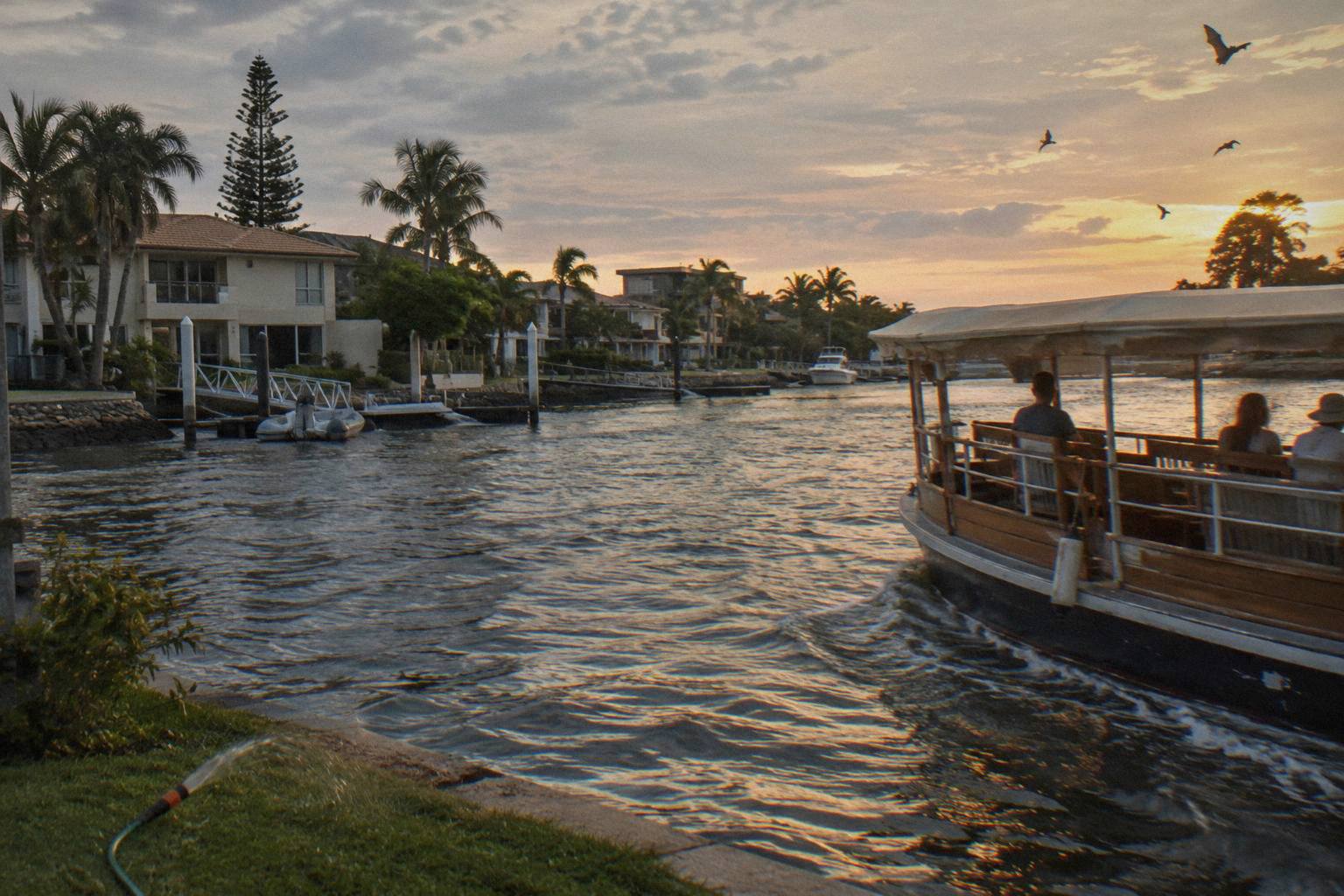
The Aquaduck is rated 4.7 from 170+ reviews and combines a land tour with a splash into the canals from Parkyn Parade. Decision logic works better here than a single recommendation, because the weather variable is really a shelter variable. Ask three questions in order. Does the forecast show showers or steady rain? Choose an enclosed vessel or a closable-sides covered boat, or pick a trip with free cancellation up to 24 hours on the booking page. Is anyone in the group uneasy on open water? Stay inside the river and canal system, which the operator FAQ confirms for the canal cruises. Is the date fixed or flexible? Flexible dates suit the open-water trips, where weather genuinely decides whether the boat sails.
The food-and-culture format carries its own weather character. The Bushtucker Cultural Cruise, from A$120 per person for 2 hours with a welcome drink, native canapes and dessert, runs on the Saltwater Eco Tours timber vessel, and the Sunset Cruise With Live Music, from A$89 per person for 2 hours with a grazing box and welcome drink, shares the same sheltered family of boat. Both carry free cancellation up to 24 hours on the booking page, which is the clause that converts a weather worry into a plan with an exit.
Price spread across the sheltered options runs from A$38 per person for the Original 1-Hour Canal Cruise to A$75 for the Seafood Lunch Cruise and A$120 for the cultural cruise, always as from-prices that vary by date and group size. Time on the water ranges from one hour to two. That is a wide enough spread that the weather alone rarely picks the trip; it picks the format, and the format picks the boat. The Seafood Lunch Cruise, 4.8 from 900+ reviews, sits at the centre of that decision for most first-time visitors, and the best time for a Mooloolaba cruise page works through the timing question in more depth.
The Aquaduck suits the family with mixed weather tolerance particularly well, since half the hour is on roads and the canal section arrives as the highlight rather than the whole show. It departs Parkyn Parade outside SEA LIFE, with check-in 20 minutes before, and free cancellation up to 24 hours on the booking page, which covers the family-calendar risk as neatly as the weather risk.
Planning Around The Forecast On The Day
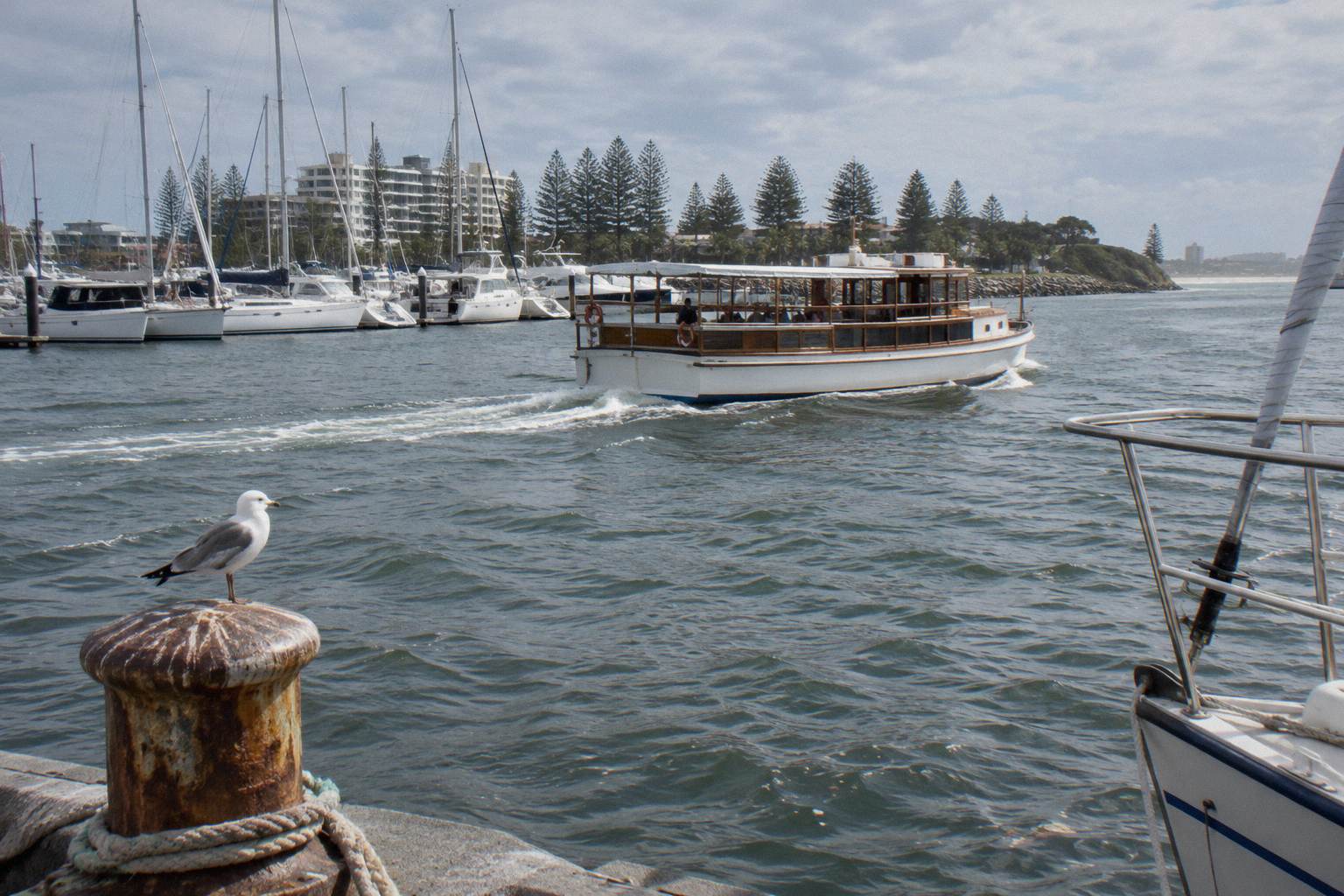
A two-day forecast beats a monthly average on the day, and the practical routine is to check the forecast, then the booking page for your trip, then the jetty. Arrive at the stated check-in window, 15 minutes before departure for the canal cruise and 30 minutes before for the lunch, cultural and raft trips. The Wharf car park offers 4 hours of free parking and fills quickly at peak times.
A paid multistorey with 700 spaces sits about 600 m away as the fallback, per the operator FAQ. The Wharf precinct doubles as the bad-weather insurance for a cruise day. Every trip covered here departs from or beside The Wharf Mooloolaba, and the precinct holds SEA LIFE and a line of cafes and restaurants, so a delayed or rescheduled departure does not strand a family with nothing to do. The operator pages list the meeting points precisely: The Booking Box for the Coastal trips, the river-side jetty behind Rice Boi for the canal boats, Parkyn Parade outside SEA LIFE for the Aquaduck, the jetty walk to the blue tower for the Saltwater trips, and the marina-side jetty next to the Prawn Star floating restaurants for the raft trip.
Getting the meeting point right is half the battle, because the jetties sit minutes apart around the same precinct but a wrong guess costs the check-in window. The booking page for each trip repeats the meeting point and the arrival time, and that page is the authority for your date. If the sky looks doubtful, it is also the page that shows whether your departure is still selling, which is a soft signal that it intends to run.
Common Mistakes When Planning A Cruise Day
The recurring mistakes are treating a departure as guaranteed, arriving at the wrong jetty, dressing for the land temperature rather than the water, and assuming drinks or extras are included. Every operator here may cancel or reschedule for weather or low numbers, the meeting points sit on different jetties around The Wharf, and winter wind on the water runs colder than the July mean maximum of 21.2 °C suggests.
Prices vary by date and group size, and only the booking page shows the figure for your date. The guaranteed-departure mistake is the costliest. A booking is a strong intention, not a promise to sail: some operators may not run a departure with very few adults booked, so check the booking page for minimum numbers, and any departure can be dropped for weather or numbers. The protection is procedural rather than hopeful. Book trips whose booking page carries free cancellation up to 24 hours where flexibility matters, watch the forecast in the final day, and know the reschedule path before the morning of the cruise rather than during it.
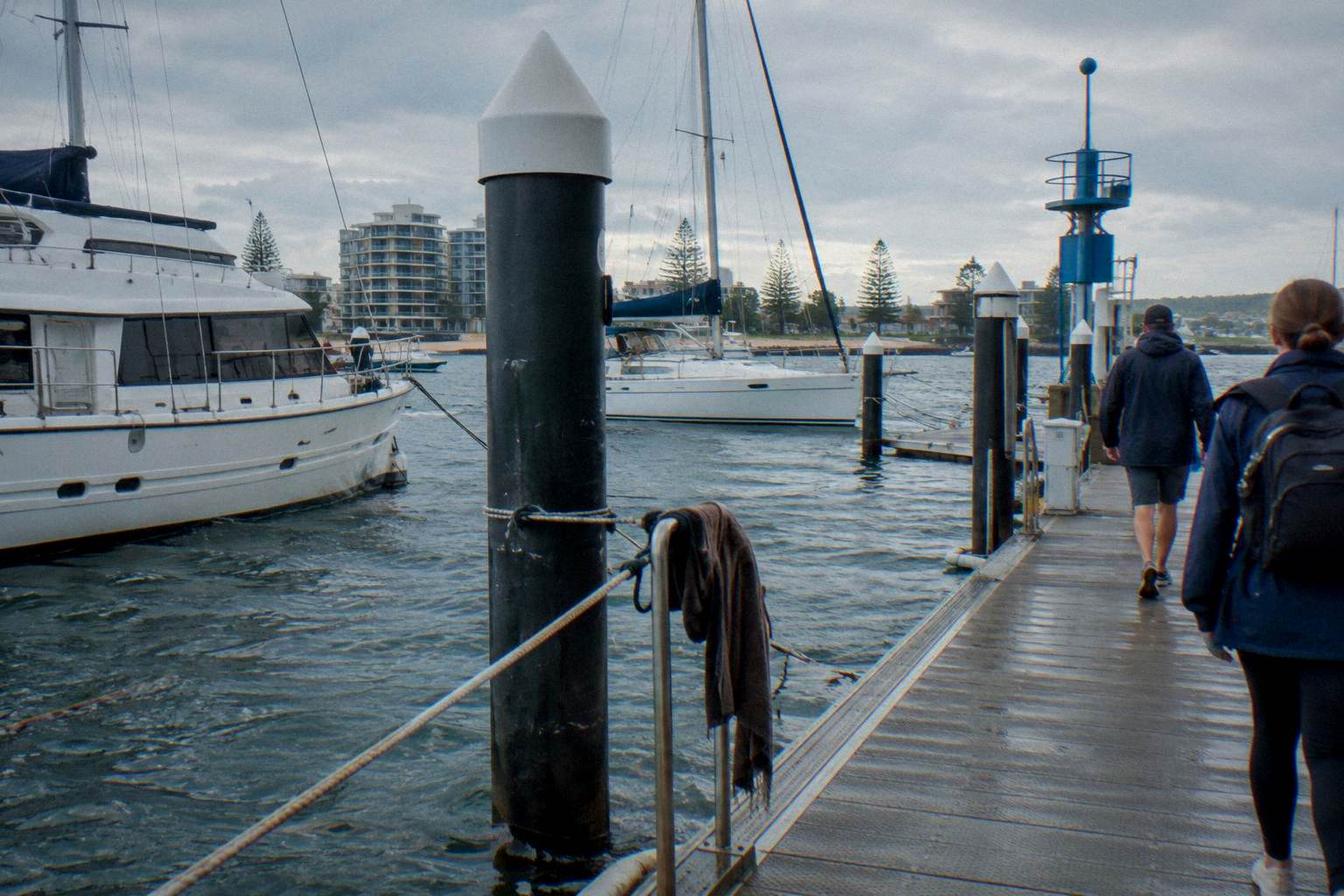
The jetty mistake is the most avoidable. The Wharf precinct has a river side and a marina side, and the trips divide between them: the canal boats behind Rice Boi, the Coastal trips at The Booking Box, the Saltwater jetty at the blue tower, the raft beside the Prawn Star, the Aquaduck on Parkyn Parade. Writing the meeting point and check-in time from the booking page onto the day plan takes one minute and saves the fifteen that matter. The parking mistake rides alongside it: the free 4-hour car park fills quickly at peak, so a busy-day plan includes the 700-space multistorey about 600 m away as the fallback.
The wardrobe mistake shows up mostly in winter and mostly on sunset trips. A July afternoon at 21 °C reads as pleasant on the esplanade and reads differently on a moving boat at the end of the day, which is why the operator FAQ advises a jacket from June to September and carries blankets on board. The drinks mistake is simpler: the canal boat has a licensed bar and snacks to buy, the lunch cruise includes lunch with drinks extra, and the Saltwater trips include their stated grazing box or canape menu with a bar beyond that. What is included is listed on each booking page, and beyond the stated inclusions, drinks are a purchase, not a given.
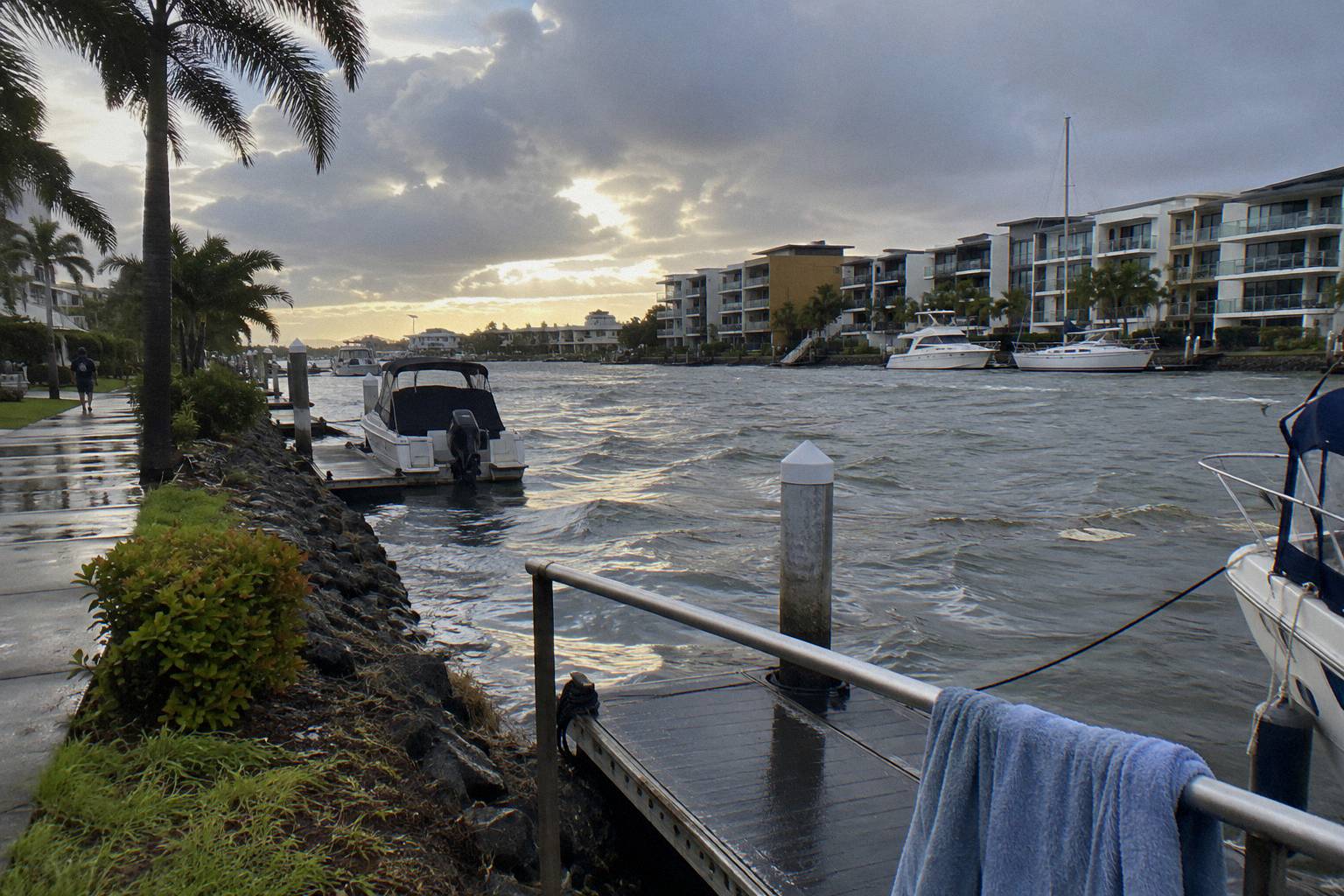
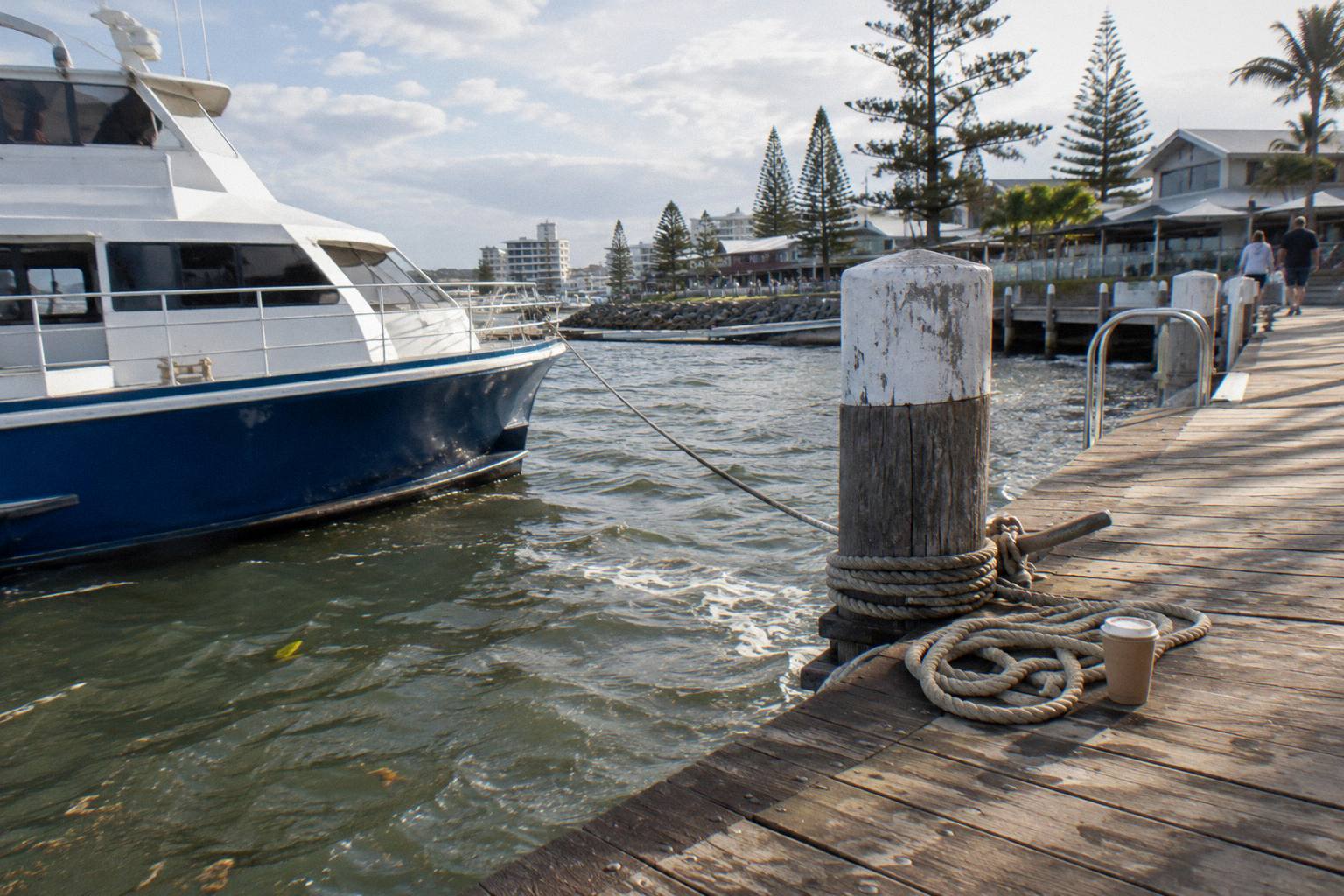
A last word on the biggest-picture choice, since the weather page is where it surfaces. Mooloolaba River Cruises exists because this stretch of the Mooloolah River stays cruiseable in conditions that would stop an ocean trip, and the canal system's sheltered water is the reason a covered boat here sails in almost any sky the coast produces. The open-water trips are magnificent in their season, June to early November for whales, but they borrow the sea's moods. The river keeps its own calendar, and it is a far steadier one.
For the three formats that between them cover a first visit in any month, the covered canal cruise, its sunset sibling and the enclosed lunch cruise are the standing shortlist.
Common Questions About Mooloolaba Weather And Cruise Days
What Is Mooloolaba Weather Really Like Month By Month?
Mean maximums run from 29.1 °C in January to 21.2 °C in July, mean minimums from 21.3 °C to 9.7 °C, and annual rainfall averages 1,499.0 mm across 107.8 rain days at the nearby airport station, recorded since 1994.
Which Months Are Wettest And Driest For A Cruise Day?
February is wettest at 214.8 mm over 11.6 rain days, March follows at 192.1 mm over the year's highest rain-day count of 12.7, and September is driest at 50.7 mm over 5.4 rain days.
Do Mooloolaba Cruises Run When It Rains?
There is no blanket rule. Covered and enclosed boats sail through showers, every operator may cancel or reschedule for bad weather or low numbers, and Saltwater Eco Tours states it contacts guests to reschedule or resolve a booking if weather makes a departure unsafe or unpleasant.
What Should I Wear On A Mooloolaba Cruise In Winter?
Take a warm jacket and long layers. The operator FAQ says winter wind on the water can be chilly from June to September, advises a jacket, and notes blankets are carried on board the canal boat.
What Time Do Sunset Cruises Leave Through The Year?
Sunset trips depart at sunset, which moves from about 5:00pm around the June solstice to about 6:45pm in December and January. The booking page shows the departure time for your date.
Do Canal Cruises Go On Open Water?
No. The operator FAQ states, "The boat does not leave the Mooloolaba Harbour River and Canal System." The whale and turtle trips are the ones that go to open water, and they are never river cruises.