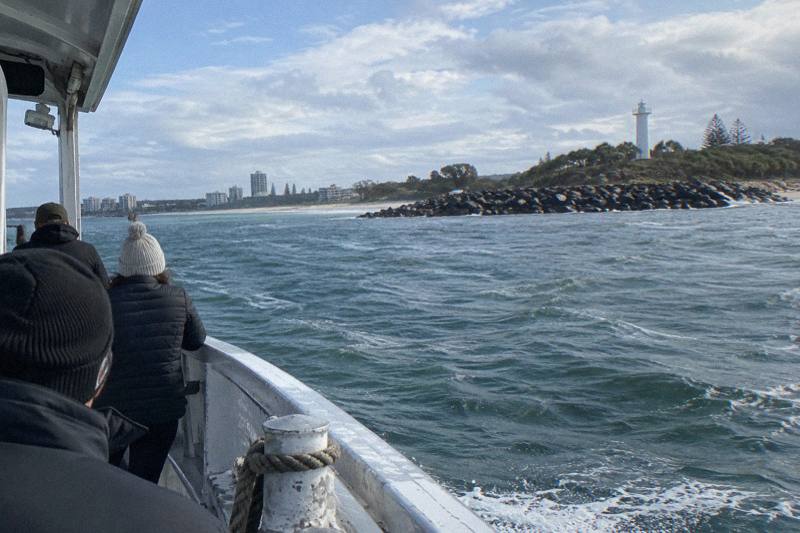
Whale Watching Cruises From Mooloolaba: Season, Boats And The Canal Cruise Alternative
Whale boats leave the Mooloolah River for open ocean between June and early November on operator pages, while every canal cruise stays inside the river and canal system. Here is how the two kinds of water compare, what a humpback actually is, and which trip suits which traveller.
Short answer
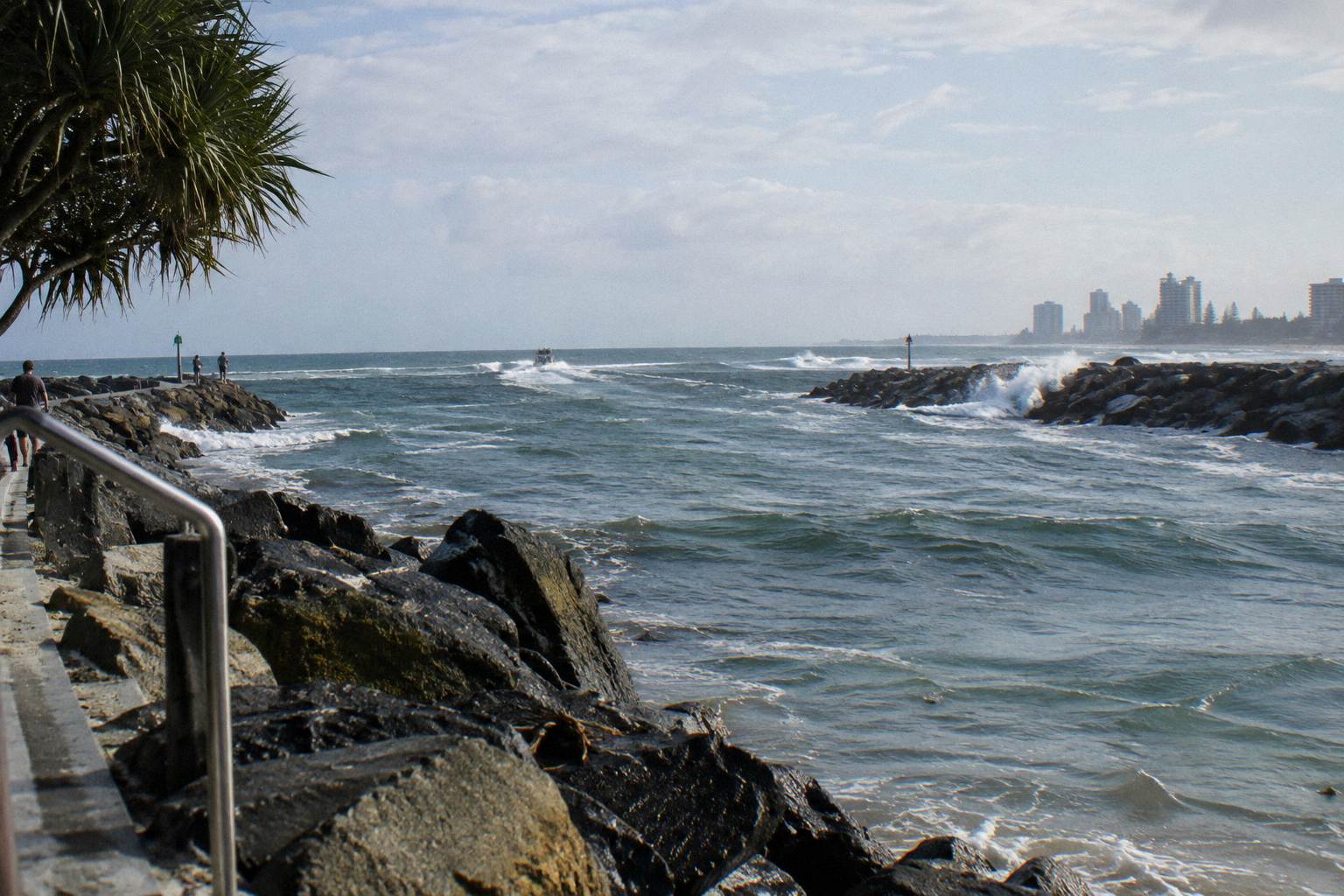
Whale watching from Mooloolaba runs June to early November on operator pages, from A$115 per person for a 2 hour open ocean trip. River and canal cruises never go whale watching: the Original 1-Hour Canal Cruise stays inside the river and canal system from A$38 per person. No trip promises a sighting.
When Is Whale Watching Season At Mooloolaba?
Whale watching from The Wharf runs June to early November on operator pages, and only on open ocean, never on the river. The season shape the operators describe has humpbacks heading north in June and July, a crossover through August and September, then southbound whales through September and October. The Queensland Government whale page gives no Sunshine Coast season dates, so the June to early November window rests entirely on what the whale boat operators say.
That distinction matters more than it first appears. The Queensland Government humpback page describes adult humpbacks as about 16 m long and 30 to 45 tonnes, with white whales rare and never promised. It says nothing about when those animals pass any particular headland. The season dates that circulate for Mooloolaba come from the whale boat operators' own pages, which is why every date in this comparison is written as an operator-page statement rather than a rule of nature.
The shape of the migration also explains why mid season and late season trips can feel like different products even at the same price. In June and July the animals are moving north, mostly bound for the breeding grounds further up the coast. By September and October the flow has reversed and the southbound run includes mothers with calves travelling closer inshore, at least in the general pattern whale operators along the whole east coast describe. None of that promises anything about a single morning on the water.
| Season phase | Months | Migration direction | Operator-page pattern |
|---|---|---|---|
| Early season | June and July | Northbound | Whales heading toward breeding grounds |
| Mid season | August and September | Crossover | Northbound and southbound mix |
| Late season | September and October | Southbound | Return run including cows and calves |
| Off season | November to May | None passing | Whale trips not sold from The Wharf |
For anyone visiting outside the season window, the whale option simply disappears from the practical list, and the river and canal trips become the whole show. The cruises compared at Mooloolaba cover how those year round options stack up against each other, since every canal, lunch and sunset trip runs through winter while the whale boats wait for the migration.
What The Whale Watching Cruise From Mooloolaba Actually Involves?
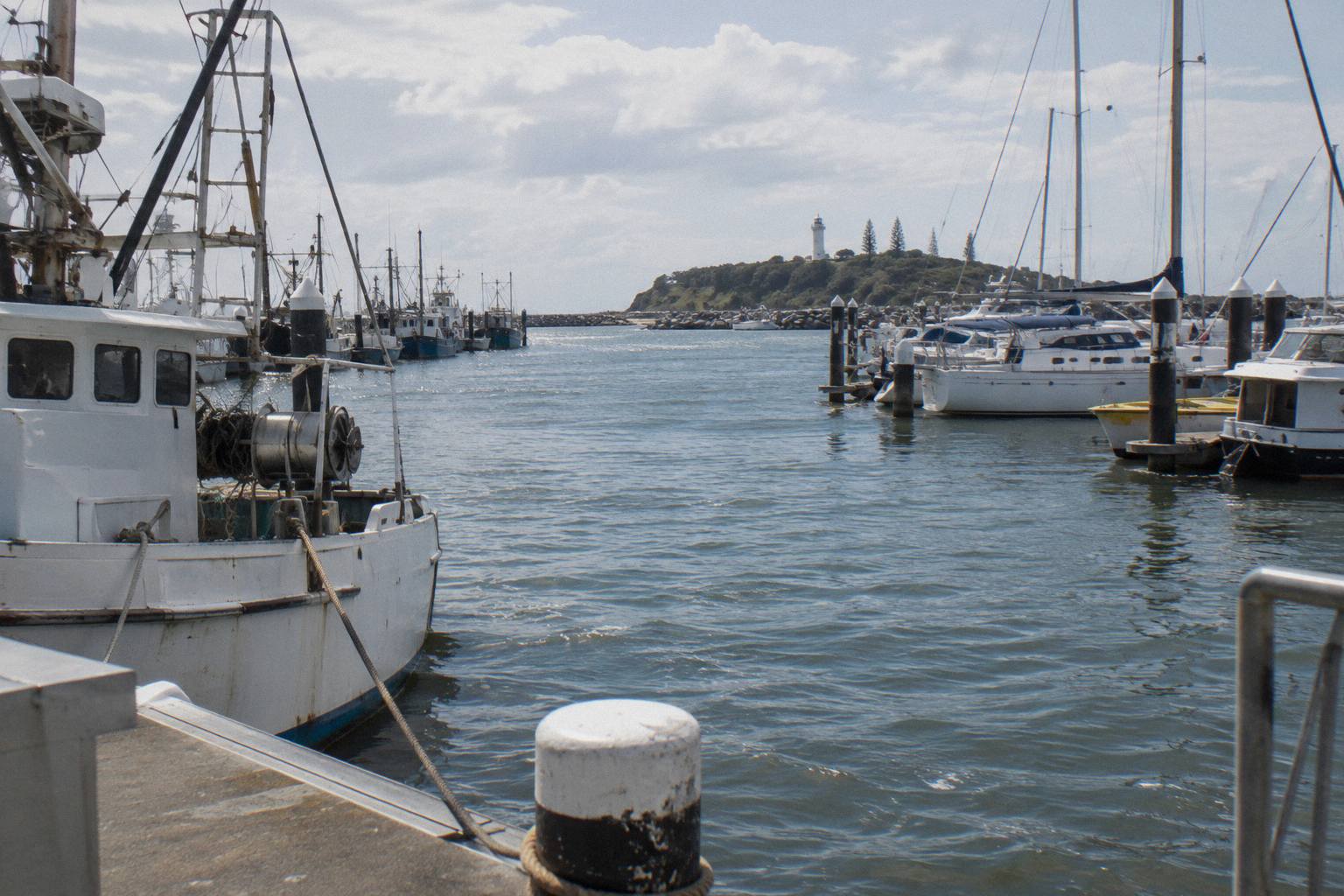
The Whale Watching Cruise runs 2 hours from A$115 per person, departing The Wharf Mooloolaba and leaving the river for open ocean, where Wharf whale boat operators describe about 15 minutes from the dock to open water and 2 to 3.5 hours on the water. No operator is named for the trip, and its inclusions, cancellation terms and age rules are not published, so the booking page for your date is the only reliable source for those details.
That is the limit of what can be said about the trip itself. The from-price and the duration are firm, the meeting point at The Wharf Mooloolaba is firm, and the open ocean character is firm. Everything else, what is served on board, whether children have a minimum age, what happens if the swell is up, sits behind the booking page rather than in any published summary. Ask the operator those questions directly before paying.
What the surrounding whale boat pages do describe is the geography. The Mooloolah River exits to the ocean past a river mouth and bar, and once a boat crosses that line it is in open water, which is a different environment from the river and canal system in every respect that matters to a passenger: swell, spray, wind and the motion of the deck. The Queensland Government page is the authority on the animals, the operator pages are the authority on the boat, and neither promises a sighting on any given day.
The trip is booked through its own tour page, which carries the live price for your date: the whale watching cruise tour page holds the current availability. Anyone weighing it against a calmer morning on the river should read on, because the two products share a departure point and almost nothing else.
Whale Trip Or Canal Cruise: Which Water Suits You?
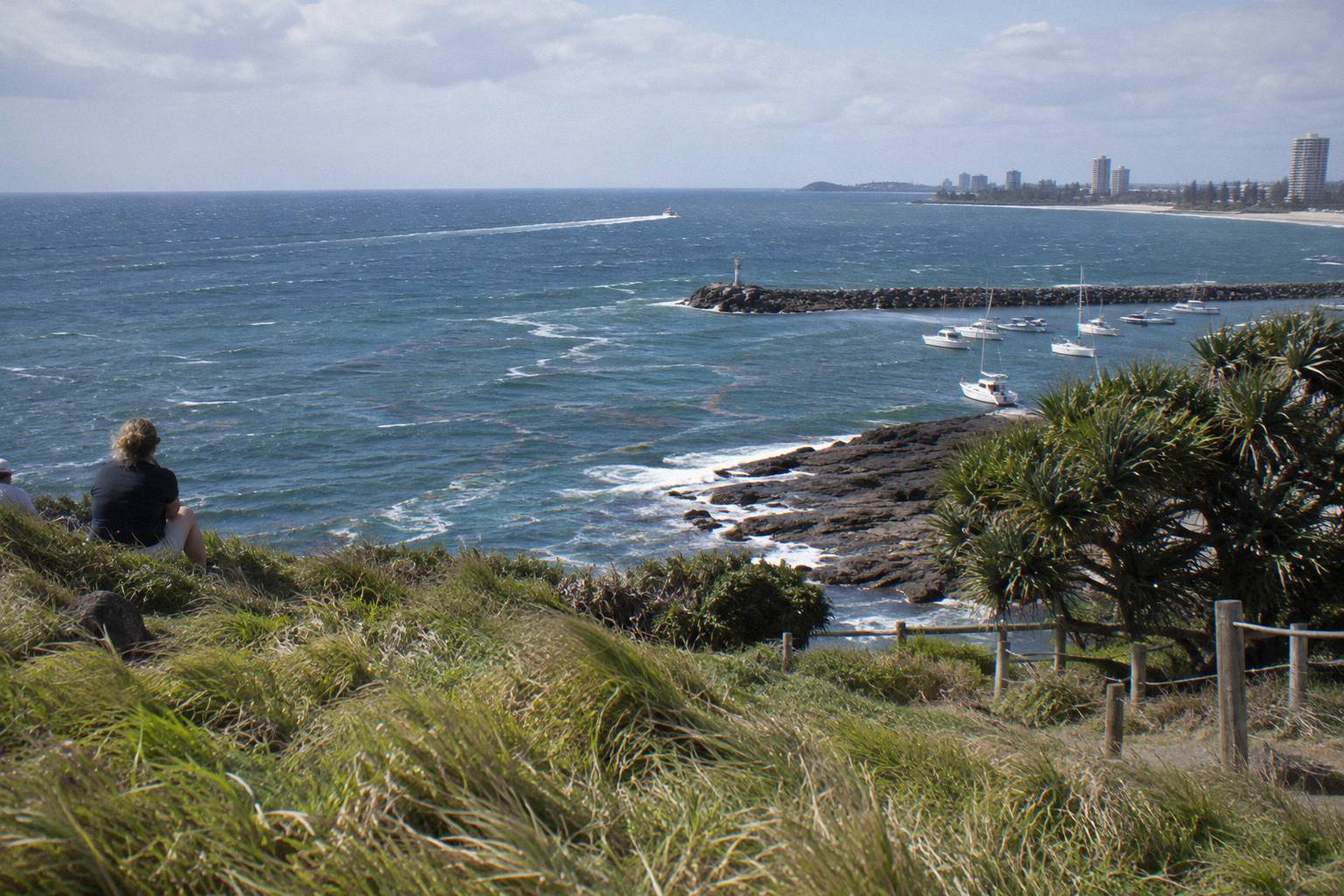
The whale trip leaves the river for open ocean for 2 hours from A$115 per person between June and early November; the canal cruises stay inside the river and canal system year round, from A$38 per person for the Original 1-Hour Canal Cruise. The choice is really a choice of water: swell and horizon on one side, sheltered canals and waterfront houses on the other. Neither kind of trip promises wildlife.
The Mooloolaba Canal Cruise operator states it plainly: "The boat does not leave the Mooloolaba Harbour River and Canal System." That single sentence settles the most common confusion in Mooloolaba booking searches. A canal cruise cannot go whale watching because it never reaches the ocean, and a whale boat is not a river cruise because its whole purpose is the crossing. The blog post on whether whales are visible from a canal cruise takes the question apart in more detail.
| Whale Watching Cruise | Original 1-Hour Canal Cruise | |
|---|---|---|
| Water | Open ocean, past the river mouth | River and canal system only |
| Duration | 2 hours | 1 hour |
| From price | from A$115 per person | from A$38 per person |
| Season | June to early November on operator pages | Year round pattern on operator pages |
| Wildlife | Humpbacks possible, no sighting promised | Osprey nest and pilot boats, "may even catch a glimpse of" per operator |
| Operator named | Not published | Mooloolaba Canal Cruise |
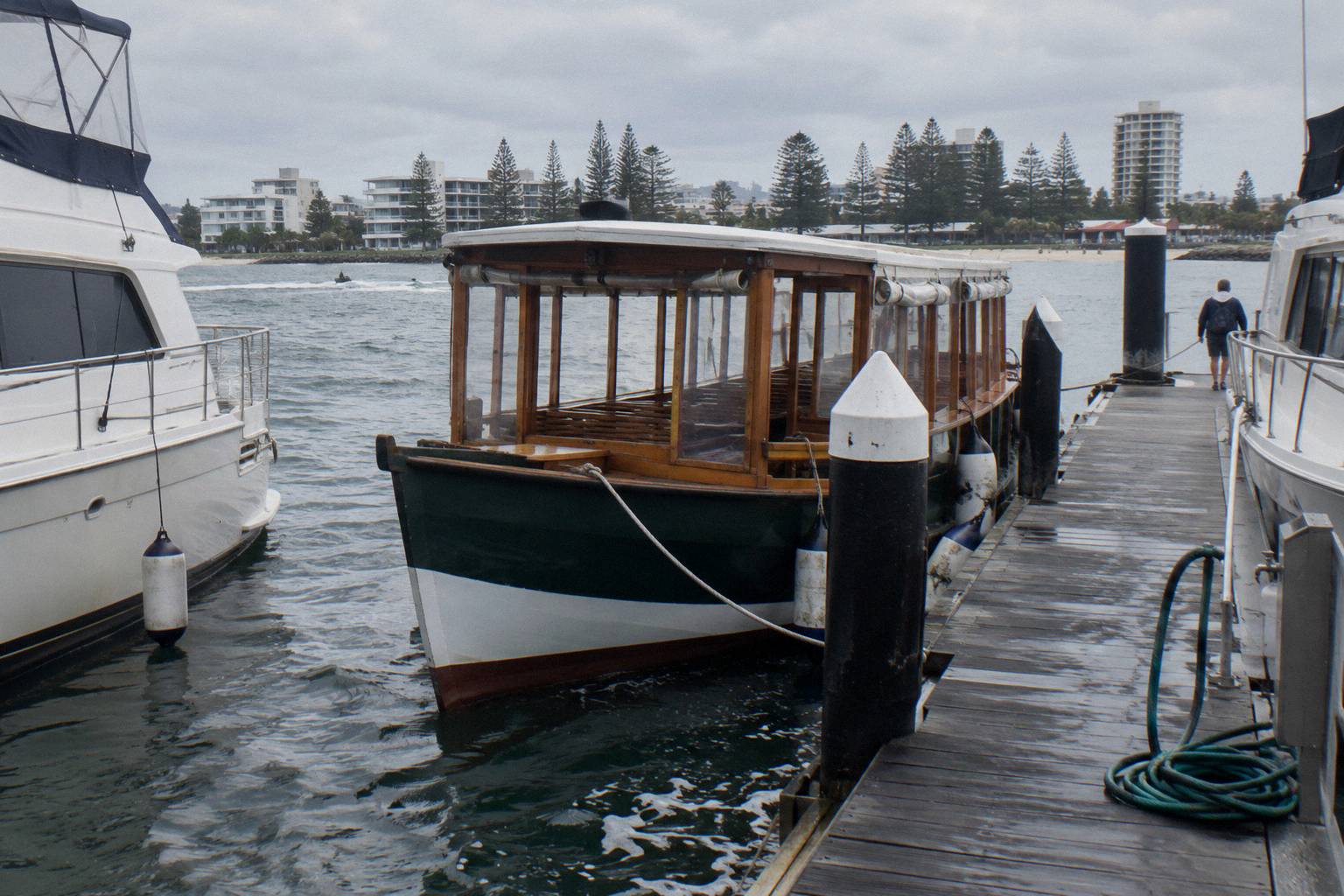
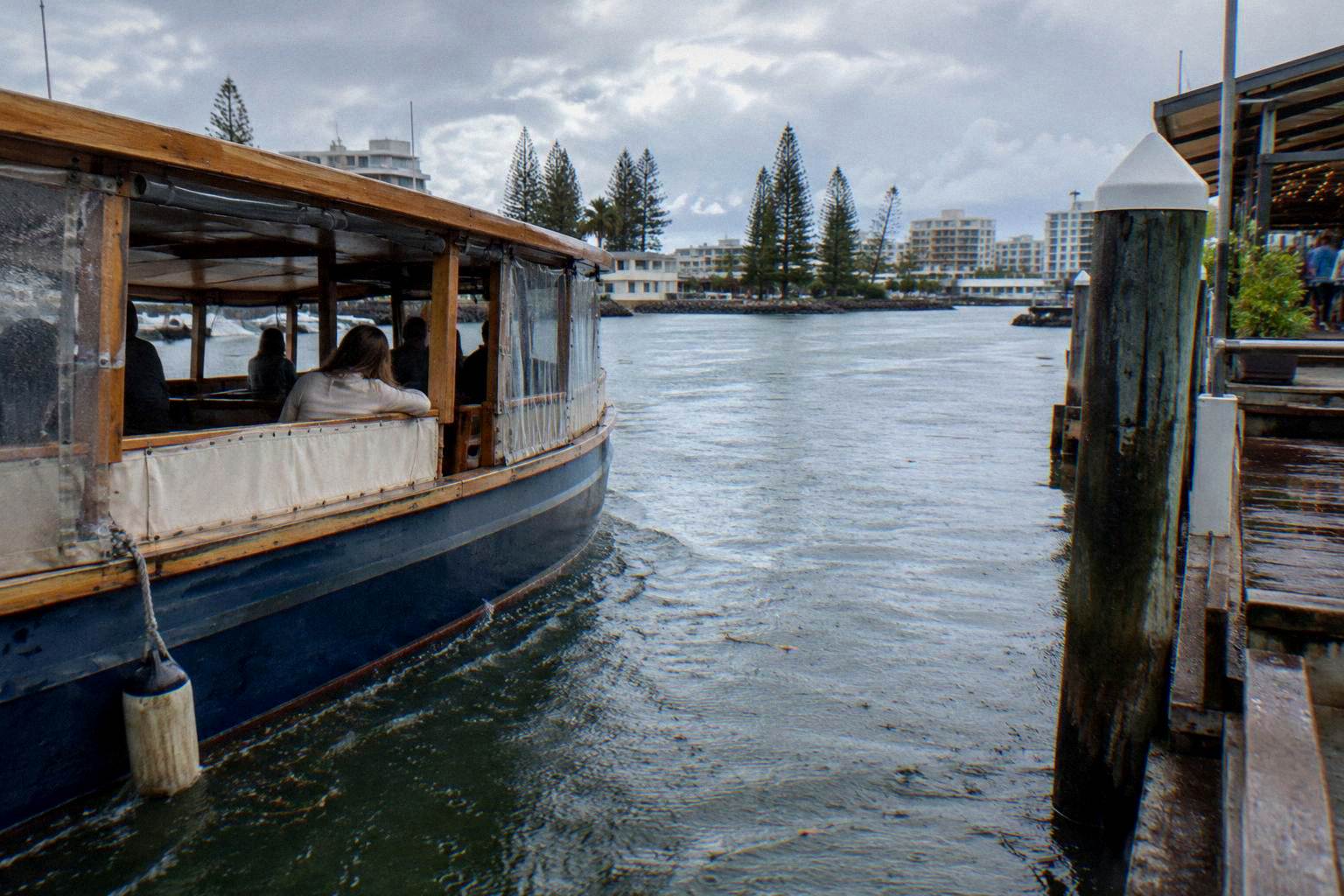
The canal cruise fills the other half of the picture. The operator describes a family-run business working from The Wharf for over thirty years, with a timber vessel, the MV Mudjimba, built in 1963 as a Brisbane cross-river ferry and brought to Mooloolaba in 1990. Its route runs the Wharf and Marina, Mooloolah Island, Minyama Island and the Kawana canal system, out toward the river heads past La Balsa Park, with the operator claiming a view "from Mooloolaba Beach to Noosa Heads" and a pass by what it calls Australia's largest long line fishing fleet. Guests may take the helm beside the skipper, which is a listed inclusion.
For a reader in whale season deciding between one water or the other, price per hour is the wrong lens, because the two trips sell different things entirely. The whale trip sells distance from shore and the possibility of a 30 tonne animal beside the boat. The canal cruise sells an hour of sheltered water, commentary and a working heritage ferry.
The deciding factors are practical ones. Anyone uneasy on open water, anyone prone to motion sickness, or anyone booking with small children outside the whale season should lean toward the river, and the operator says the canal boat is covered with open sides that can be closed, with a small toilet and a licensed bar on board. Anyone whose whole reason for visiting the coast in August is whales should take the ocean trip and check Whale Watching Cruise for their dates, keeping in mind that no departure is promised until the booking page confirms it.
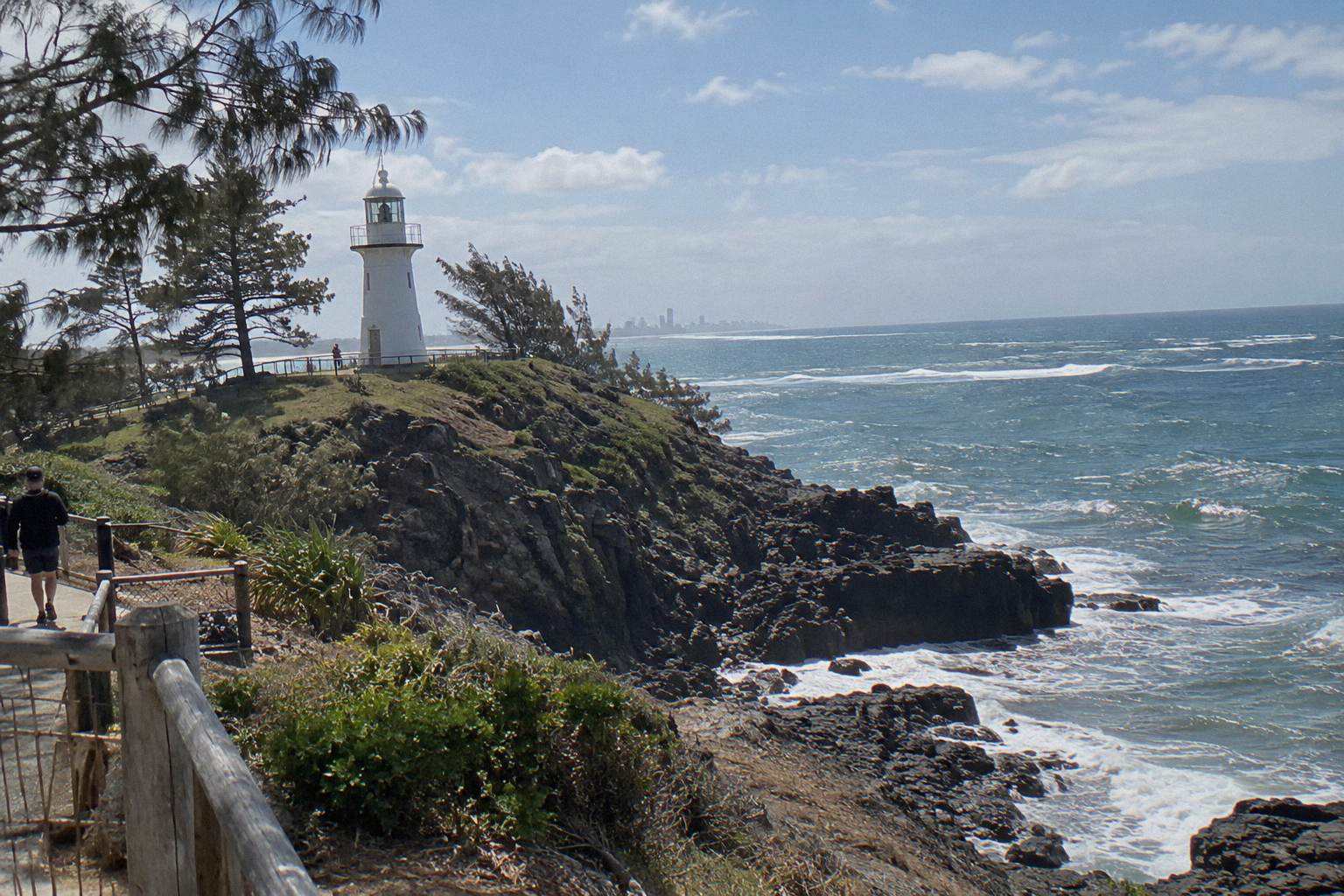
What Kind Of Whale Swims Past Mooloolaba?
The humpback whale is the species behind every Mooloolaba whale trip, and the Queensland Government page puts adults at about 16 m long and 30 to 45 tonnes. White whales, the Migaloo type, are described as rare and are never promised on any trip. The same page gives no Sunshine Coast season dates at all.
Those numbers are worth holding onto when a booking page shows a photograph of a breaching whale. A full grown humpback is longer than the boat most day trippers ride out on, and heavier than several of them stacked together.
The southbound leg of the migration is the part whale operators along the east coast generally describe as the mother and calf period, with cows and calves travelling nearer the coastline on the way back to the southern feeding grounds. Whether any particular trip encounters a calf, a competitive group or nothing but ocean is decided by the day, which is exactly why no operator page and no booking page can promise a sighting, and why none is implied here.
For river cruisers the answer is different. The canal cruise operator's own wildlife wording extends to pilot boats and an Osprey nest that passengers "may even catch a glimpse of", phrasing chosen precisely because it promises nothing. Whales do not enter the river and canal system, so a canal ticket buys sheltered water and waterfront, not the migration. The wider guide to wildlife on the Mooloolah River by cruise covers what the river itself holds.
Sea Conditions, The Bar And Lifejacket Rules
Maritime Safety Queensland lists the Mooloolah Bar as a designated coastal bar, and on a designated bar lifejackets are compulsory for everyone on an open boat or in an open area of any boat. That rule bites on whale boats and private hire crossing to open ocean, not on the canal cruises, which stay inside the river and canals. A general Queensland rule caps speed at 6 knots in boat harbours, marinas and canals.
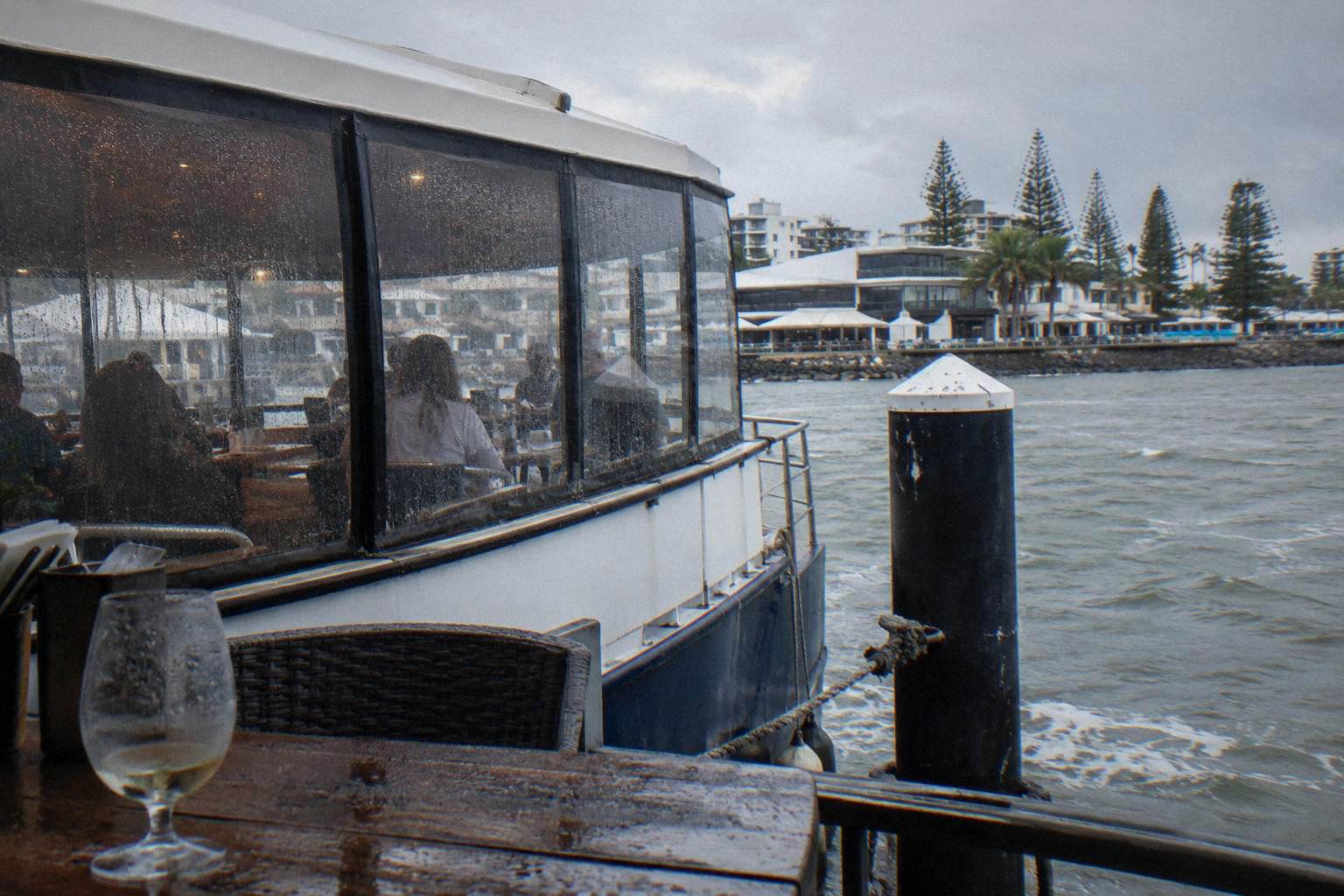
The bar is the line between the two worlds described above, a shifting sandbank crossing at the river mouth where ocean swell meets river outflow. Maritime Safety Queensland's bar crossing page names Mooloolah among the designated coastal bars and sets out the lifejacket rule that applies there. It is a safety rule for the boat and its crew to manage, but it tells a passenger something useful too: the moment the whale boat leaves the river, it enters water governed by different conditions and different equipment requirements than the canals behind it.
No published accident, injury or seasickness statistic exists for these trips and none is invented here. What can be said is structural: the canal cruises operate on still water inside the harbour system by the operator's own statement, while the whale and turtle trips go to open water where swell and wind vary by the day. Anyone prone to seasickness should ask the operator directly before booking the ocean trips, and anyone who wants the general harbour speed rule can read it on Maritime Safety Queensland's speed limits page, which states it as a statewide rule rather than a Mooloolaba one.
Weather also moves the two kinds of trip differently. The canal boat operator runs a covered all weather vessel with sides that can be closed, and notes that winter wind can be chilly from June to September, advising a jacket, with blankets on board. The whale boats' booking pages do not state a weather policy, and departures on any ocean boat are at the operator's judgement: a departure can be dropped for low numbers or weather on the river trips, and ocean conditions at least as easily.
Mooloolaba Weather Through The Whale Season
The nearby airport station records mean maximums of 21.5 °C in June, 21.2 °C in July, 22.3 °C in August, 24.3 °C in September and 25.7 °C in October, with September the driest month of the year at 50.7 mm over 5.4 rain days. The whole whale season sits in the dry, mild half of the Sunshine Coast year, though no wind, wave or best month figure exists to print.
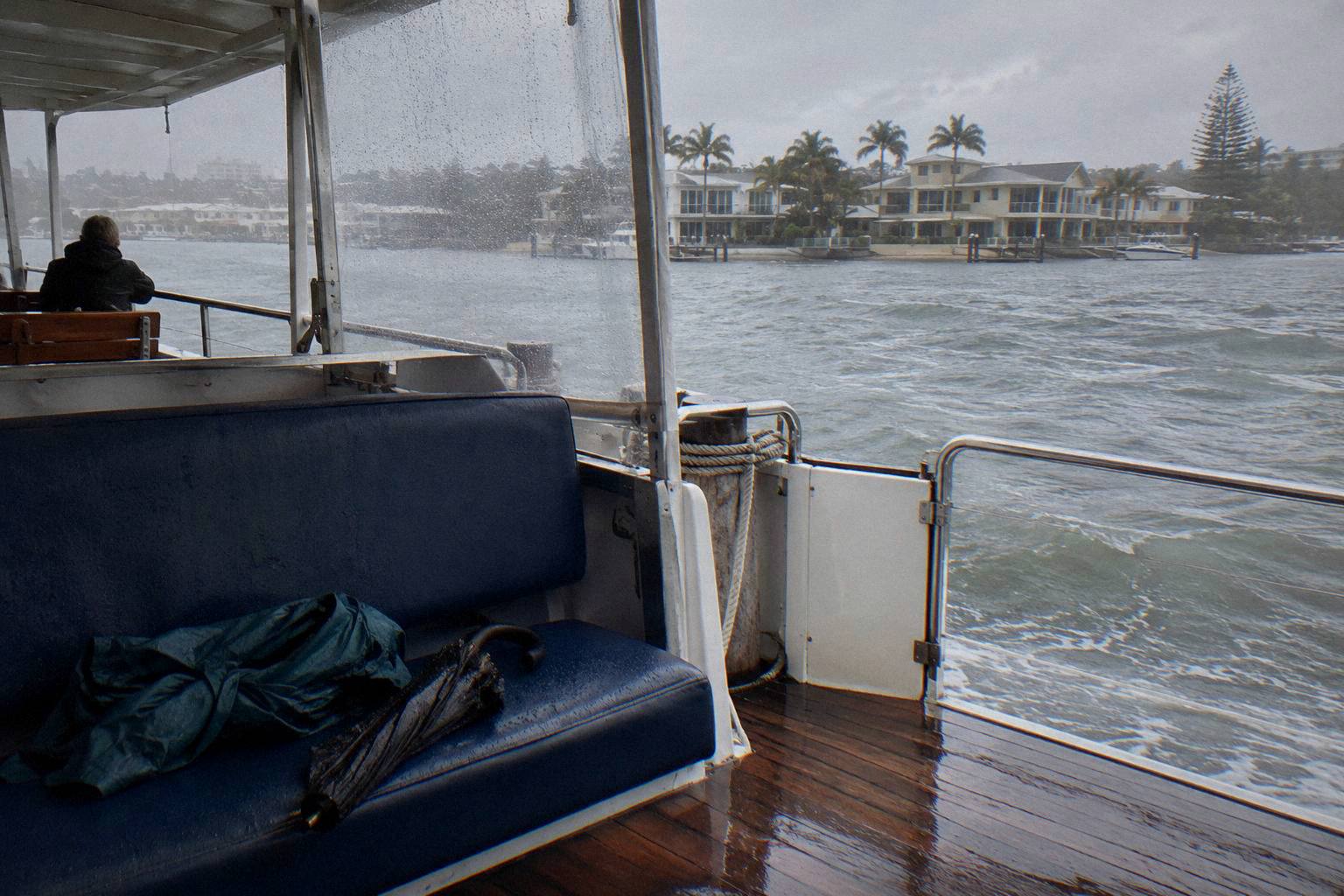
The Bureau of Meteorology averages, taken at the airport station over all years of record, frame what a whale season day feels like on land before anyone boards. July is the coolest month by a fraction, June and July both hovering near 21 °C mean maximum, then a steady climb as the season runs into late spring. Rainfall tells the clearer story: February is the wettest month at 214.8 mm, while the whale months of July through October hold between 50.7 mm and 99.6 mm, with rain days of 1 mm or more falling to 5.4 in September.
| Month | Mean max C | Mean min C | Mean rain mm | Rain days 1 mm+ |
|---|---|---|---|---|
| June | 21.5 | 11.3 | 104.6 | 8.9 |
| July | 21.2 | 9.7 | 69.4 | 6.9 |
| August | 22.3 | 10.1 | 73.2 | 5.6 |
| September | 24.3 | 13.0 | 50.7 | 5.4 |
| October | 25.7 | 15.8 | 99.6 | 7.5 |
Those figures come from the Bureau of Meteorology climate averages table for the airport station, about 9 km north west of The Wharf. They describe land weather, not sea state, and no published wave or wind figure for the whale grounds exists to bridge that gap. The planning advice is that the whale season's months are statistically the calmest and driest of the year on shore, and that the ocean on any given morning is a separate question only the operator can answer.
Sunset matters less to a whale trip than to the evening boats, but it bounds the day: sunset runs from about 5:00pm around the June solstice to about 6:45pm in December and January, a computed seasonal range rather than an official table. A June whale morning and an October one share mild air and different light, and the canal cruise's winter jacket advice holds across the whole early season.
Who Each Trip Suits: Traveller Types Compared
Families with young children outside whale season suit the canal cruises, with a 30 guest group size and a covered boat with a toilet on board; in whale season the ocean trip suits travellers whose priority is the migration itself, from A$115 per person. The Turtle Tour By Raft splits the difference, reaching open water from A$79 per person with a 23 guest group, while lunch and sunset boats serve food and timing priorities.
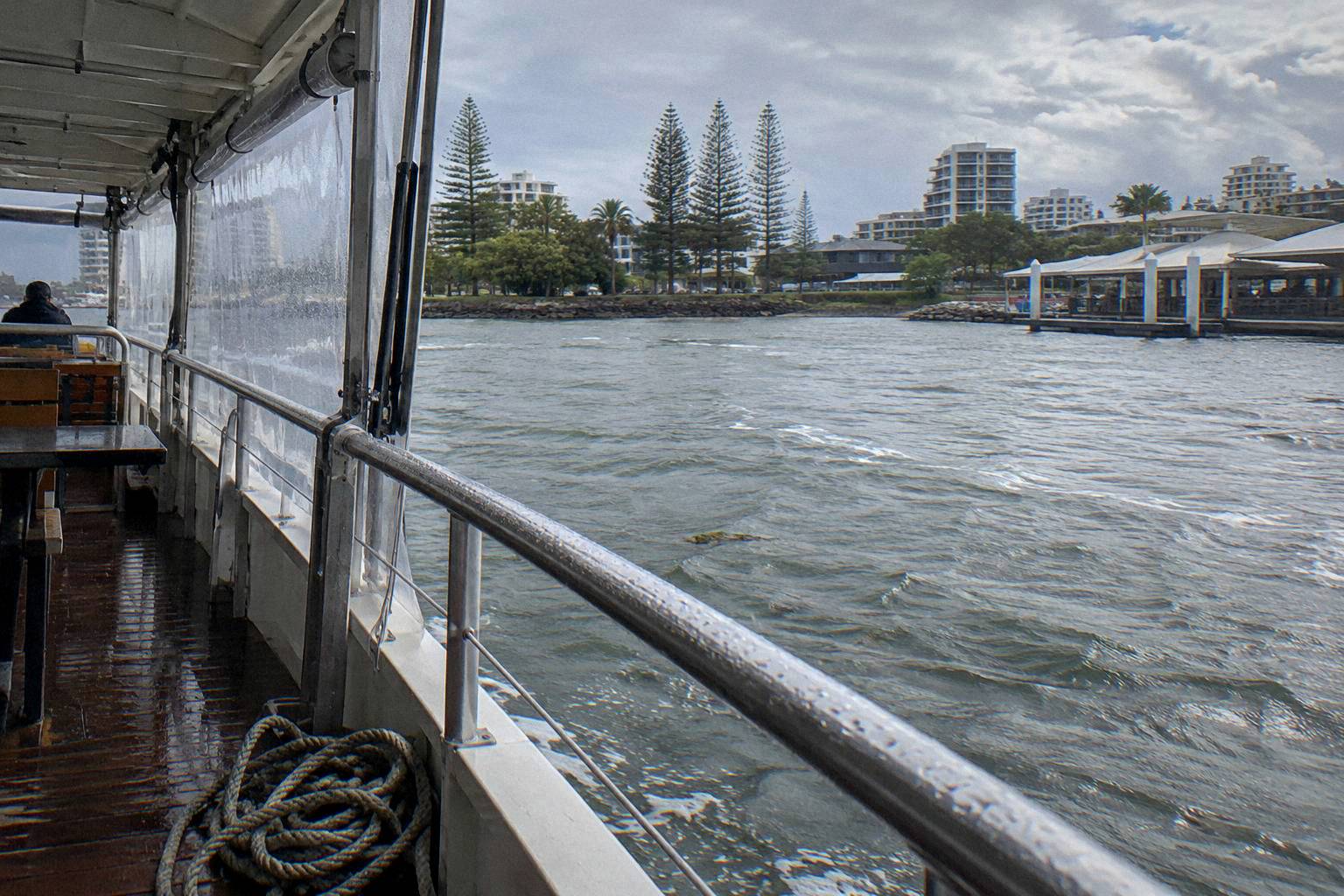
Working through the types is more useful than ranking trips, since no operator's boats compete on quality here, only on format. A visitor with a free morning and a modest budget gets the clearest deal on the river: the Original 1-Hour Canal Cruise runs a year round pattern of 11am, 1pm and 2.30pm departures on the operator page, times may vary, from A$38 per person, and the operator says check in opens 15 minutes before departure at the river side jetty of The Wharf. The operator also notes the boat is not fully wheelchair accessible, with a ramp and three steps up and three down, and that pets are not allowed except certified guide, hearing and assistance dogs.
The whale enthusiast in July is a different buyer. For that traveller the 2 hour ocean trip is the point, the higher fare buys the crossing, and the right questions are the ones in the checklist further down. A traveller who wants ocean water without committing to a full whale trip can look at the Turtle Tour By Raft, Adventure Rafting Mooloolaba's 1 hour open water trip from A$79 per person, meeting at the marina side jetty of The Wharf next to the Prawn Star floating restaurants, arriving 30 minutes before departure.
Food driven travellers have two river options. The Seafood Lunch Cruise, from A$75 per person for 1 hour 30 minutes, is the cruise with the most reviews, 4.8 from 900+ reviews, and includes lunch with drinks extra. The Bushtucker Cultural Cruise from Saltwater Eco Tours, from A$120 per person for 2 hours, includes a welcome drink, native canapes and dessert with First Nations storytelling. Neither belongs on a whale page except as the add on or swap in: a reader who books a morning whale trip and wants the afternoon on the water can pair the two, and a reader who decides against open ocean can swap the river lunch cruise in at a lower fare than the whale trip.
Prices, Cancellation And Booking Practicalities
The whale trip runs from A$115 per person and the canal alternative from A$38 per person, all amounts in Australian dollars, with prices varying by date and group size and the booking page showing the figure for the date. Free cancellation up to 24 hours on the booking page applies to several trips, but the whale trip's cancellation terms are not published, so check the terms on the booking page for your date before paying.
Stating the whole price picture at once: among the trips compared here, the Original 1-Hour Canal Cruise runs from A$38 per person, the 1-Hour Canal Sunset Cruise from A$40, the Coastal Sunset Cruise from A$55, the Aquaduck Amphibious Tour from A$56, the Turtle Tour By Raft from A$79, the Seafood Lunch Cruise from A$75, the Sunset Cruise With Live Music from A$89, the Whale Watching Cruise from A$115 and the Bushtucker Cultural Cruise from A$120. Those are from prices per person, nothing more, and no two of them should be added, averaged or turned into an hourly rate, because the trips sell different things.
All nine trips, including the Original 1-Hour Canal Cruise and the Whale Watching Cruise, carry free cancellation up to 24 hours before departure on the booking page. A departure on any of them can be affected by weather or numbers, and the Saltwater Eco Tours FAQ says the operator contacts guests to reschedule or resolve the booking if weather makes a departure unsafe or unpleasant.
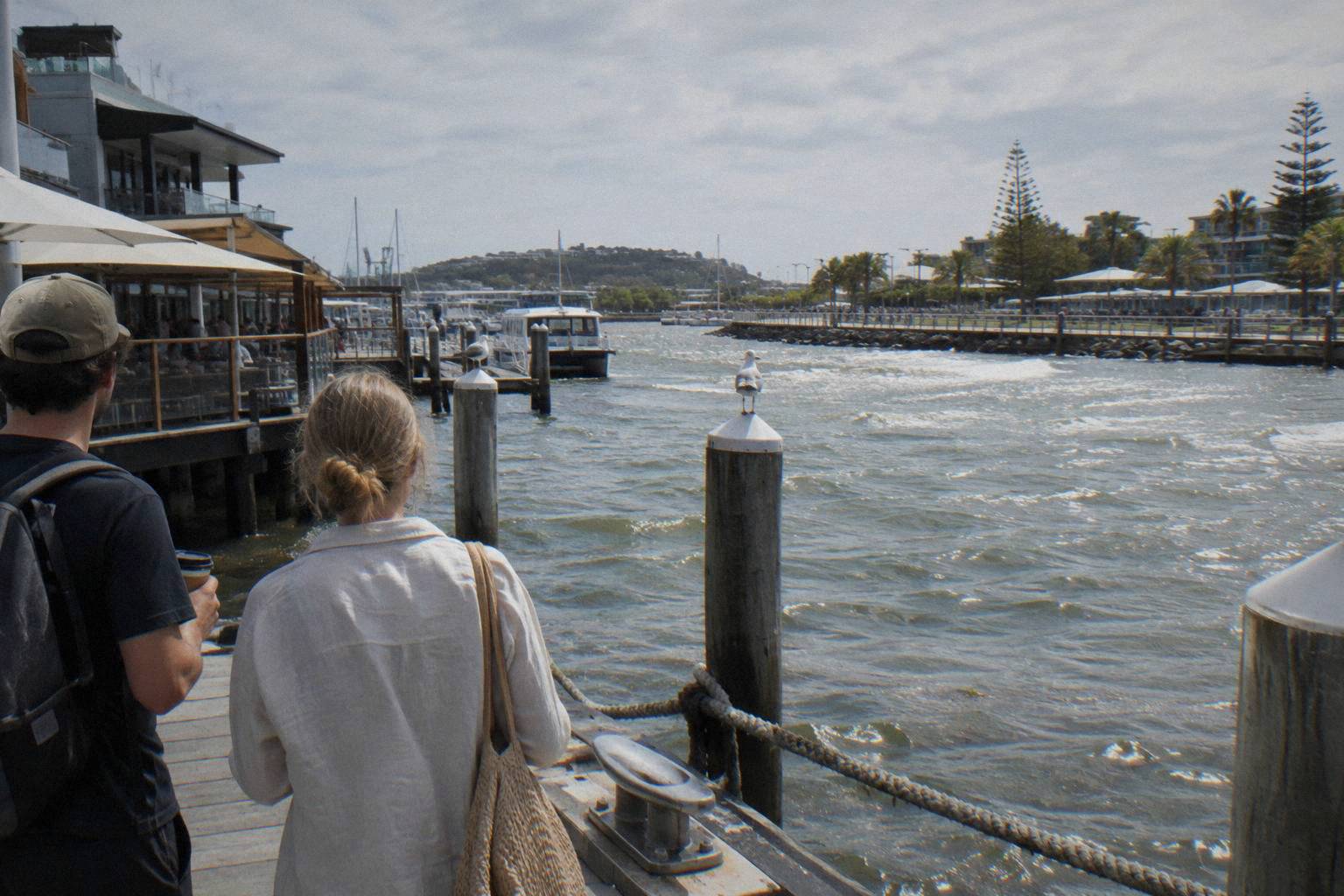
Meeting points cluster at The Wharf Mooloolaba but not at one spot. The whale trip meets at The Wharf, with boat and pickup details not published. The canal cruise meets at the river side jetty behind Rice Boi, the Coastal trips at The Booking Box, the turtle raft at the marina side jetty, and the Saltwater trips along the jetty toward the blue tower. Parking at the Wharf car park is 4 hours free and fills quickly at peak times, with a paid multistorey of 700 spaces about 600 m away, per the operator FAQ, so arriving early in season is simple self interest.
What To Ask The Operator Before Booking A Whale Trip
Five questions cover almost everything a booking page leaves open: what the cancellation and reschedule terms are for your date, whether there is a minimum age or child policy, what is included on board, what happens if no whale appears on the day, and where exactly the boat departs and returns. Ask the operator or check the live booking page before you pay. The booking page and the operator hold every answer; no published summary does, and asking before paying avoids every surprise that matters.
A short checklist, built only from the gaps in what is published. First, cancellation and reschedule terms for the specific date, since nothing is published for the whale trip here. Second, the age and child rules, which are not published for the whale trip, and which differ elsewhere: the Saltwater sunset cruise takes infants 0 to 2 free, while the Aquaduck's minimum age is not published. Third, inclusions, food, drink and facilities, since the whale trip publishes none and the canal boats publish a bar, snacks and a small toilet.
Fourth, the sighting question, phrased plainly: what does the operator say happens if the day is quiet? Whale boat operators publish their own sighting policies: some offer a free return trip if no whales appear. Ask what happens on a quiet day before you book. Fifth, the practicalities of the day: departure point at The Wharf, return time, and what the operator advises for clothing on open water in a winter month where the mean minimum sits near 10 °C. The same five questions work for the canal boats, where most answers are already published, which is itself a useful signal of what a well covered booking page looks like.
A reader working through that list who realises their priority is a calm, cheap, near certain departure rather than open ocean has already answered their own question. The canal cruise's booking page covers meeting point, check in window, vessel facilities, route and group size, so there is little left to ask the operator, and the complete canal cruise guide walks the rest. The whale trip rewards the opposite temperament: fewer details on the booking page, a bigger question, and a conversation with the operator worth having.
Pairing A Whale Trip With A River Cruise
The strongest itinerary in whale season is a morning or midday whale trip followed by a river cruise the same day or the next, since every departure sits at or beside The Wharf Mooloolaba. The whale trip's 2 hours on open ocean and the canal cruise's 1 hour of sheltered water cost from A$115 and from A$38 per person, and the pairing covers both halves of Mooloolaba's water: ocean horizon and canal waterfront in one visit.
The practicality is the Wharf itself. Both trips, the lunch cruise, the sunset boats and the turtle raft all meet within a short walk of the same car park, restaurants and jetty cluster, so a two trip day costs one parking problem, not two. The canal operator's departures at 11am, 1pm and 2.30pm on its page, times may vary, slot around most whale trip windows, and an afternoon canal hour is a gentle landing after a morning of swell. The pairing logic also works in reverse for a family split: one adult takes the ocean trip while the rest ride the ferry, then everyone meets at The Wharf for lunch.
Sunset closes the day for travellers who want it. The 1-Hour Canal Sunset Cruise runs from A$40 per person, and the Coastal Sunset Cruise from A$55 for 1 hour 30 minutes, both following the sun down from about 5:00pm near the June solstice to about 6:45pm in December and January. A fuller comparison of evening options, including the Sunset Cruise With Live Music with its grazing box and welcome drink, sits in the Mooloolaba sunset cruise guide, while Mooloolaba River Cruises holds the full set of river options in one place.
Common Mistakes When Booking A Whale Watching Trip
The recurring mistakes are assuming a canal cruise sees whales, booking a whale trip outside the June to early November operator season, expecting a guaranteed sighting, assuming drinks and food are included, and arriving at the wrong jetty at The Wharf. Each one is avoidable with a single check of the booking page for the date, and none of the trips carries published protection against the mistakes.
The first mistake is the search engine's own fault as much as anyone's: people type whale questions and land on canal cruise pages, and the operator's FAQ answer is unambiguous, "The boat does not leave the Mooloolaba Harbour River and Canal System." No river ticket becomes a whale ticket. The second is calendar maths: a January visitor cannot buy the June to November product, whatever a search result implies, and the river and canal trips are the year round water.
The third mistake is expecting a promise. No page in the verified facts promises a whale, a white whale, a breach or a calf, and the Queensland Government explicitly describes white whales as rare and not to be promised. The fourth is assuming inclusions: the whale trip publishes none, and on the river boats drinks and snacks are extras to buy at the licensed bar. The fifth is the jetty: The Wharf has several, and the canal boat leaves from the river side jetty behind Rice Boi, the Coastal boats from in front of The Booking Box, the Saltwater boats from along the jetty by the blue tower, and the whale trip's exact departure details from The Wharf are on the booking page. Arriving 15 to 30 minutes early per each trip's stated window, at the right jetty, solves the last of them.
Common Questions About Whale Watching At Mooloolaba
Can You See Whales From A Mooloolaba Canal Cruise?
No. The canal cruise operator states the boat does not leave the Mooloolaba Harbour River and Canal System, and whales do not enter it. Whale watching happens on open ocean trips that leave the river, running June to early November on operator pages.
When Is Whale Watching Season At Mooloolaba?
June to early November on the whale boat operators' pages. June and July are the northbound migration, August and September the crossover, and September and October the southbound run. The Queensland Government page gives no Sunshine Coast season dates.
How Much Does The Whale Watching Cruise Cost?
From A$115 per person for the 2 hour trip, meeting at The Wharf Mooloolaba. Prices vary by date and group size, and the booking page shows the price for your date. The trip's inclusions and cancellation terms are not published, so ask the operator.
Is A Whale Trip Guaranteed To See Whales?
No trip can promise a sighting because the whales are wild, though some operators offer a free return trip if none appear. Ask the operator what happens on a quiet day before booking.
Which Is Better For Kids, The Whale Trip Or The Canal Cruise?
The whale trip's age rules are not published, so ask the operator. The Original 1-Hour Canal Cruise runs from A$38 per person with a covered boat, a toilet and up to 30 guests, and guests may take the helm beside the skipper, a listed inclusion that suits children.
Do Whale Boats And River Cruises Leave From The Same Place?
All leave from or beside The Wharf Mooloolaba, but from different points: the canal boat from the river side jetty behind Rice Boi, the whale trip from The Wharf with exact details on the booking page. Check the meeting point before you go.